
Viktoriia Roshchyna’s last prison
After nearly nine months in Taganrog, Russia’s Guantanamo, the Ukrainian journalist ended her ordeal in the Russian prison system in Kizel prison, in the Perm region. Thanks to new testimony and documents, Forbidden Stories reveals new details about Vika’s final days.
(Credit: F-Atlas)
By Stas Kozliuk, with Poline Tchoubar and Guillaume Vénétitay
December, 11th 2025
Kizel is a small town with less than 20,000 inhabitants in the Perm region, more than 1,200 kilometres from Moscow. Located west of the Urals, it has been in decline since the closure of its last coal mines 25 years ago. It was here, in the city’s temporary detention centre number 3 (SIZO-3), that Ukrainian journalist Viktoriia Roshchyna died on September 19 2024.
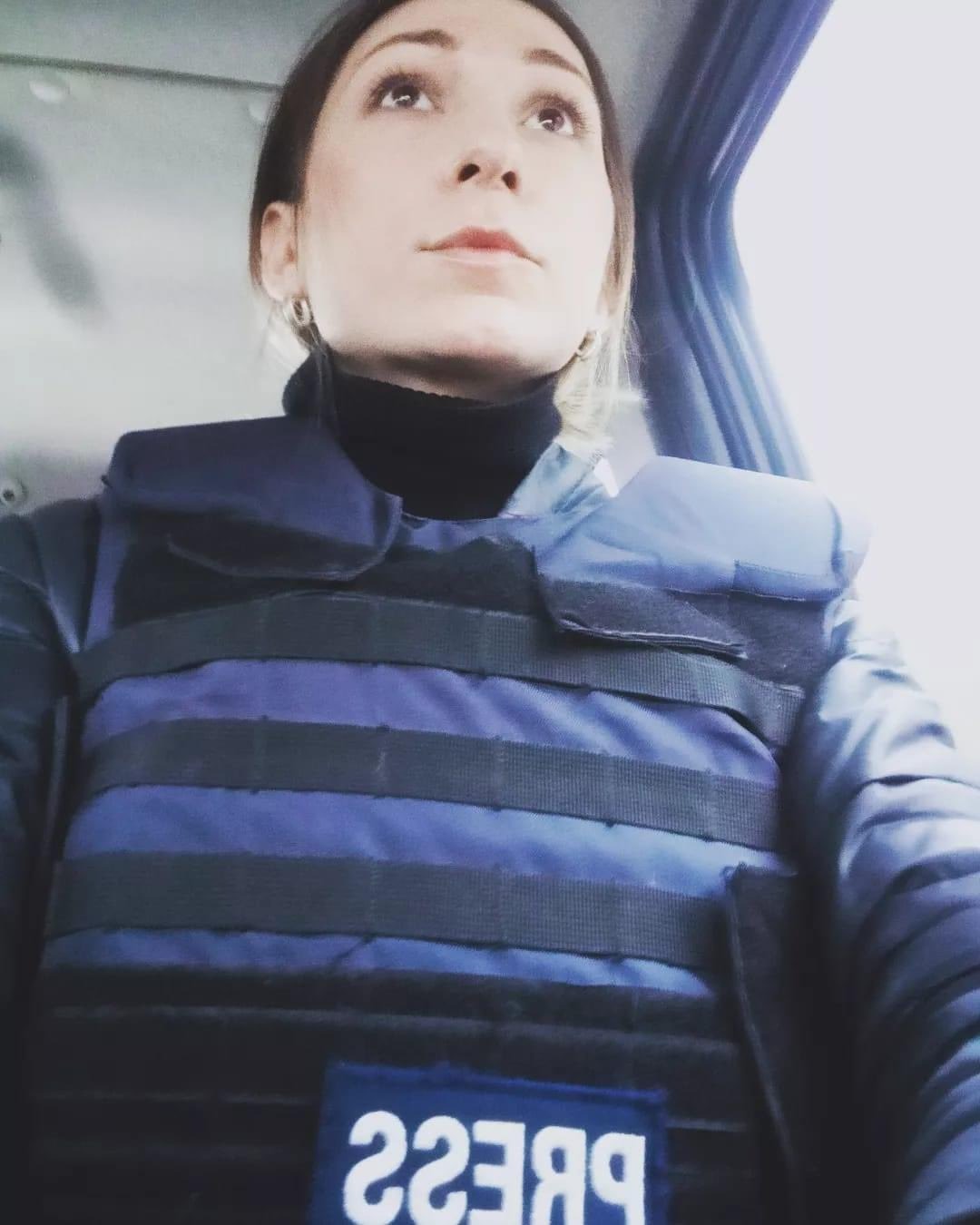
(Credit: courtesy of hromadske).
After spending nearly nine months in the hell of Taganrog, a Russian prison on the shores of the Sea of Azov nicknamed the “Russian Guantanamo”, the reporter was finally transferred to SIZO-3 in Kizel. She had been taken from her cell in Taganrog on September 9, nearly two weeks before the official date of her death. Several clues pointed to Viktoriia’s possible inclusion in a prisoner exchange between Ukraine and Russia scheduled for mid-September. But she never appeared, and her relatives received no information until the announcement of her death in October 2024.
For many months, no one was able to trace Viktoriia’s last days. Forbidden Stories and twelve media partners continued the journalist’s work. Published on April 30th, 2025, our investigation revealed the fate of the reporter, who had been transferred between several detention centres in occupied Ukraine and Russia, as well as signs of abuse on Viktoriia’s body, which was repatriated in February 2025. Like her, thousands of Ukrainian civilians have been abducted, held incommunicado and systematically tortured by the Russian authorities since the large-scale invasion of Ukraine.

New witnesses released from Russian prisons during prisoner exchanges provide a better understanding of Viktoriia’s journey and her transfer to Kizel. Mykyta Semenov is a fighter with the Azov Regiment. Imprisoned in Taganrog in september 2022, he was on the convoy on the 9th of September 2024 that travelled to SIZO 3 in Kizel, 2,500 kilometres from Taganrog. The journey began by train and ended in trucks on the 12th of September. Semenov shared the same carriage as the journalist. “there were two compartments near the prison administration, reserved for prisoners considered dangerous. In one of them, there were two women alone, including Vika,” he revealed to the press for the first time.
"As if her dress was carrying her"
The soldier identified her by listening through the thin walls as members of the FSIN, the Russian prison administration, spoke to Viktoriia, who was in the compartment next to his. He saw her when she walked down the corridor to go to the toilet. “She was wearing a loose-fitting, light blue summer dress with small flowers. On her feet, she had black summer trainers with white soles,” Mykyta Semenov described. Prisoners are allowed to walk upright, but with their hands behind their backs. “She was standing upright, but had difficulty walking and talking. It was as if her dress was carrying her. She was very thin, too thin. Her skin was yellow, her hair lifeless. She had simply been turned into a mummy, as if her body was starting to rot,” describes the former prisoner with a youthful face who, at mealtimes, shared his courgettes with Viktoriia, who did not eat the meat she was served.
Civilians and military personnel travel in the same convoys. No one is allowed to talk to each other. Mykyta’s neighbour is beaten.
“When we arrived in Kizel, we realised that the situation here was going to be serious,” recalls the Azov fighter. It is similar to Taganrog: new arrivals must undergo the so-called “reception” ritual, which is incredibly violent. “They threw me into a corridor. Then they knocked me down and started beating me with their boots and their hands. They ordered me to undress and continued to beat me. They turned on the radio, playing songs from back home, like Katyusha and the whole Soviet repertoire. I lay there and lost consciousness” says Mykyta Semenov, his calm tone contrasting sharply with the severity of the abuse inflicted.
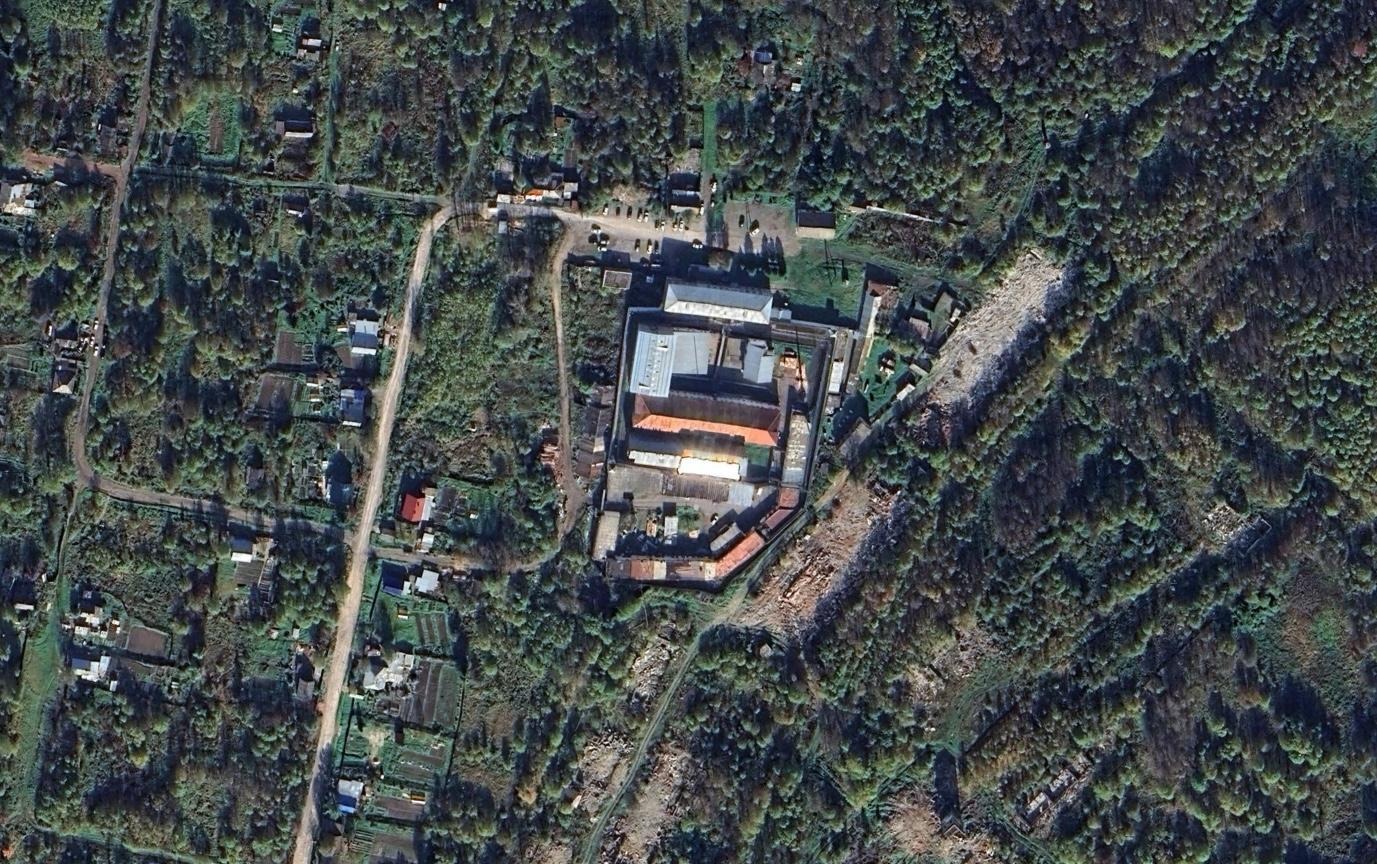
Credit: Google, Airbus – September 19th, 2024
As revealed by the Viktoriia Project, special FSIN units rotate between different facilities to torture prisoners. In Kizel, one of these units, along with the staff of SIZO-3, has inflicted violence on prisoners, according to documents from Ukrainian security sources. The methods are the same as in Taganrog: electric shocks, blows to the feet and head with long sticks, forcing prisoners to stand for hours to exhaust them, poor nutrition, etc.
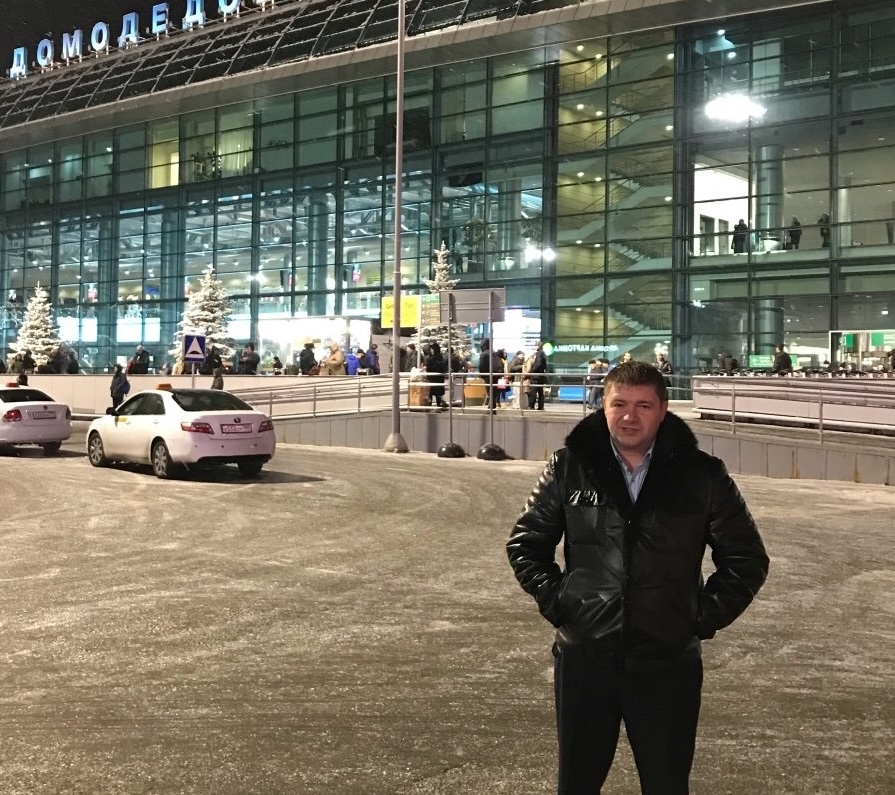
Vyacheslav Perevozkin (Credit: Instagram).
The torturers concealed their identities with balaclavas and nicknames. But Forbidden Stories managed to identify those responsible for the Kizel detention centre at the time of the events. The director is Vitaly Spirin. He is 39 years old. One of his deputies was Konstantin Chekalov. Today, SIZO-3 is now run by Vyacheslav Perevozkin, who took over from Spirin on November 6, 2024.
Contacted by our partners at IStories, Vitaly Spirin hung up as soon as a question about Viktoriia was asked. Konstantin Chekalov stated that he had never heard of the journalist and even denied having worked at SIZO-3, despite information to the contrary. Vyacheslav Perevozkin confirmed his identity. But when he was questioned about Viktoriia, he asked “where did [we] find this number?” and then said he was not Vyacheslav Perevozkin and hung up. Contacted by email, the regional administration of the FSIN referred us to the FSIN press office, which did not respond to our questions.
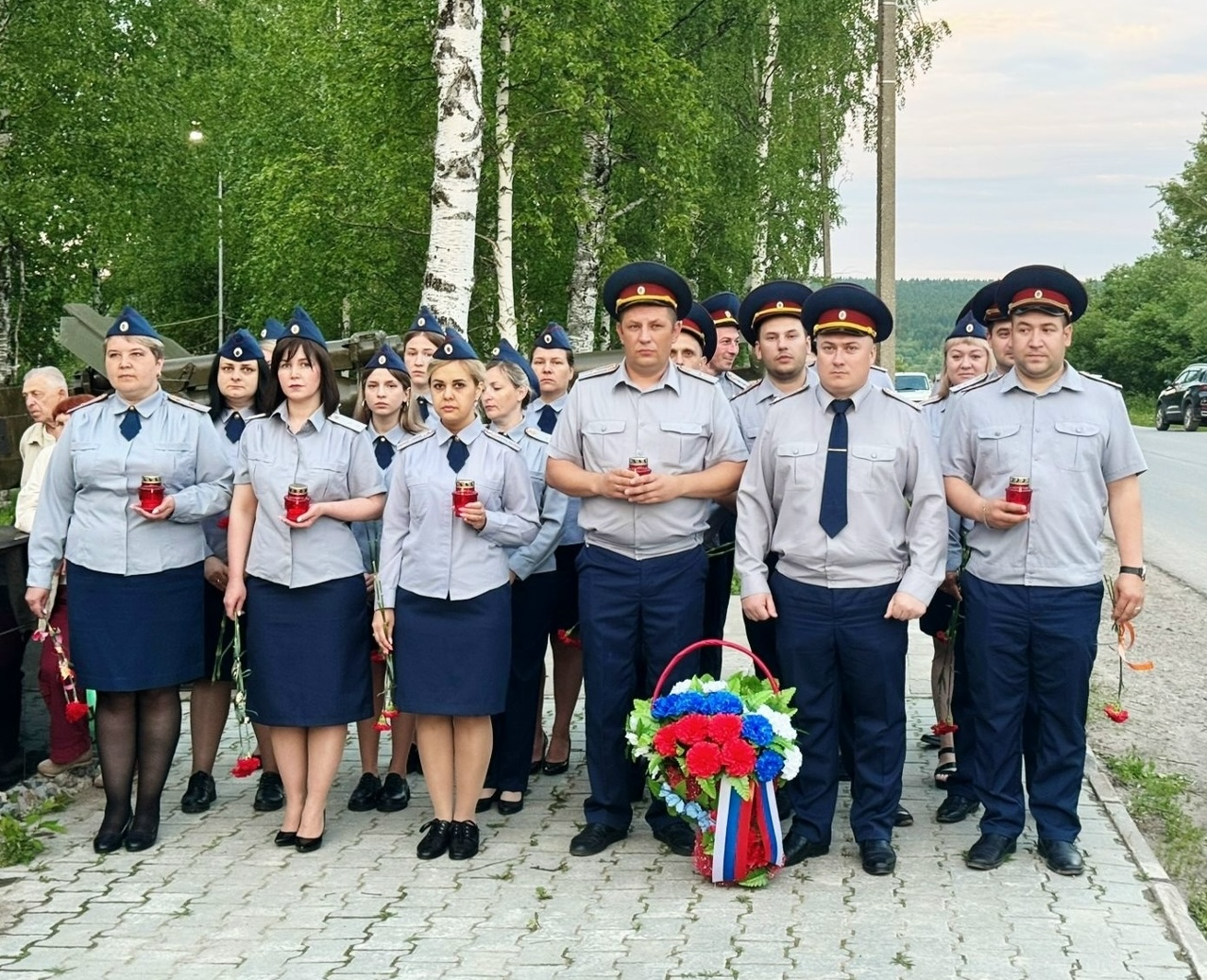
In the center of the image, Vitaly Spirin, director of the Kizel detention center at the time of Viktoriia’s internment, and to his right, his former deputy, Konstantin Chekalov (Credit: VK).
Viktoriia’s death certificate was issued from the Perm region, according to a Slidstvo investigation. What happened to Vika during her few days at SIZO-3, just before her death ? The exact circumstances of her death there remain a mystery for the time being. All that remains are clues on her frozen and mummified remains. As indicated in the Viktoriia Project, her hyoid bone was fractured, a rare trauma usually associated with strangulation, according to a source close to the official investigation. In addition, her body was returned with several parts missing, including her brain, larynx and eyeballs, which could indicate an attempt to conceal the cause of her death.
Sanctioned by the European Union
“It’s a puzzle whose pieces don’t often fit together,” laments Volodymyr Roshchyn. Viktoriia’s father is now searching for the final answers so he can continue his mourning. Since the journalist’s burial on August 8, 2025, three officials from the Taganrog prison, including Oleksandr Shtoda and Andrei Mikhailichenko, identified by the Forbidden Stories investigation, were sanctioned by the European Union on November 20, 2025 for torture and systematic ill-treatment of detainees, civilians and prisoners of war.
The memory of Viktoriia Roshchyna continues to be honoured. This summer, Ukrainian President Volodymyr Zelensky posthumously awarded her the Order of Freedom. Vika’s father wants her to receive the “Hero of Ukraine” medal, the highest distinction awarded by the government. The request, adopted by Ukrainian MPs in May, has still not been approved by the president’s office. This is incomprehensible to Volodymyr, according to a letter sent by his lawyers, emphasising that his daughter “died for the freedom and independence of [their] state”.