Killing the journalist won’t kill the story.

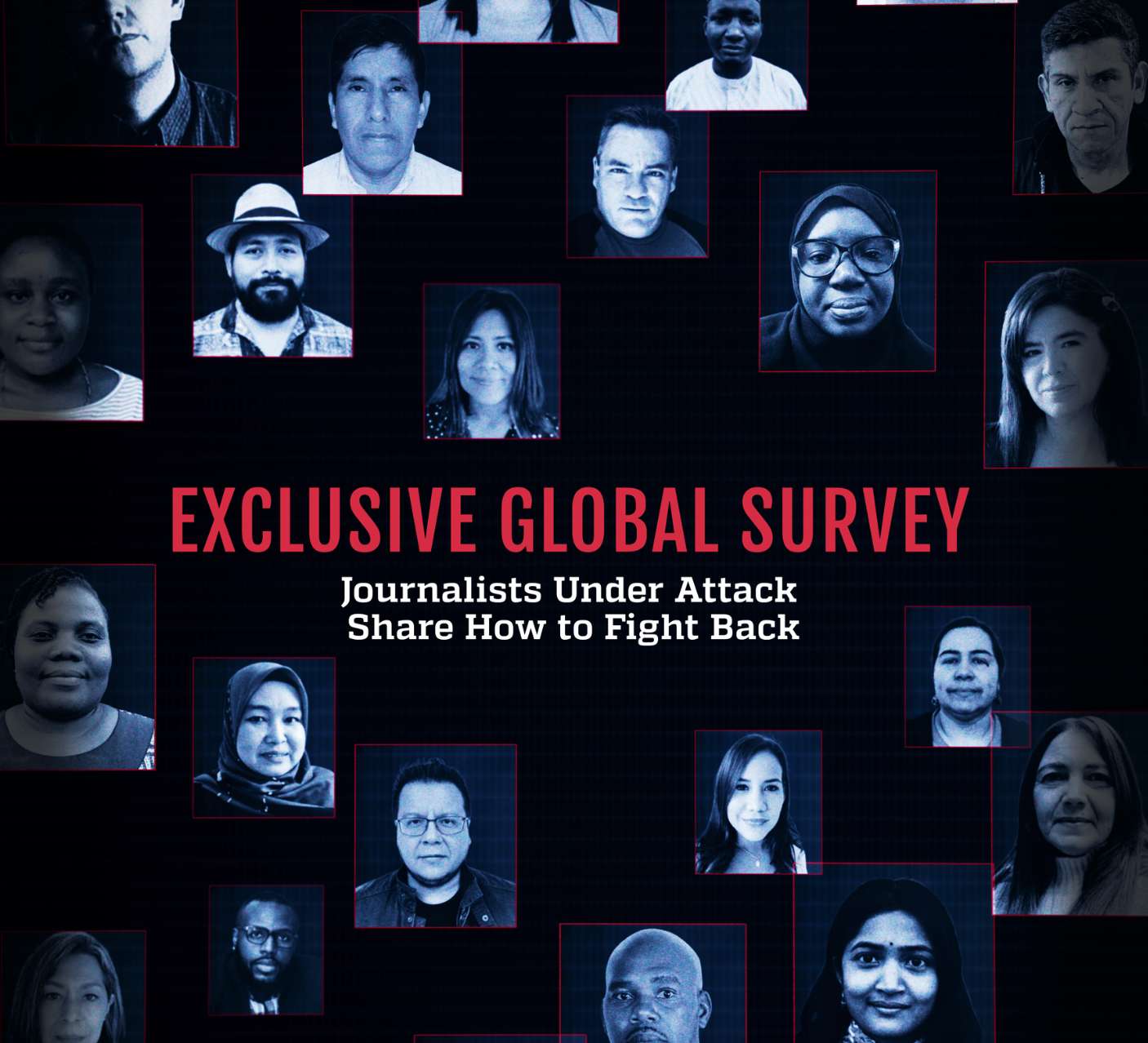
Exclusive Global Survey : Journalists Under Attack Share How to Fight Back

Ahead of the United Nations’ World Press Freedom Day (May 3), more than 200 threatened journalists across 53 countries have been surveyed by the Emmy award-winning global network of reporters Forbidden Stories. The findings unveil unprecedented data on the risks facing journalists worldwide – and, for the first time, outline a more effective way to tackle them.

Key findings

By Forbidden Stories

April 27th 2026

Despite decades of relentless efforts to protect journalists from the threats they face – driven by the remarkable and indispensable work of countless organizations – investigating has never been more dangerous. In numerous regions of the world, millions of people’s access to information depends on the courage of a handful of reporters.

We still lack an antidote to the poison wielded by enemies of the press. One that could deter them before they attempt to silence journalists. To understand these attackers, we must step into their shoes. What do they fear most? To find out, we must turn to those who know them best: journalists who have been kidnapped, arrested, attacked, harassed, or intimidated by these people – or on their orders.

This is why we at Forbidden Stories conducted an unprecedented survey of more than 200 threatened journalists across 53 countries and four continents. These are women and men who risk their lives every day to keep people informed: 37% have already been physically attacked, abducted, and/or arrested, while nearly one in three report receiving threats at least once a month.

This unique survey provides rare insight into the nature of threats journalists face, the profiles of those behind them and the topics that make reporters the most vulnerable.

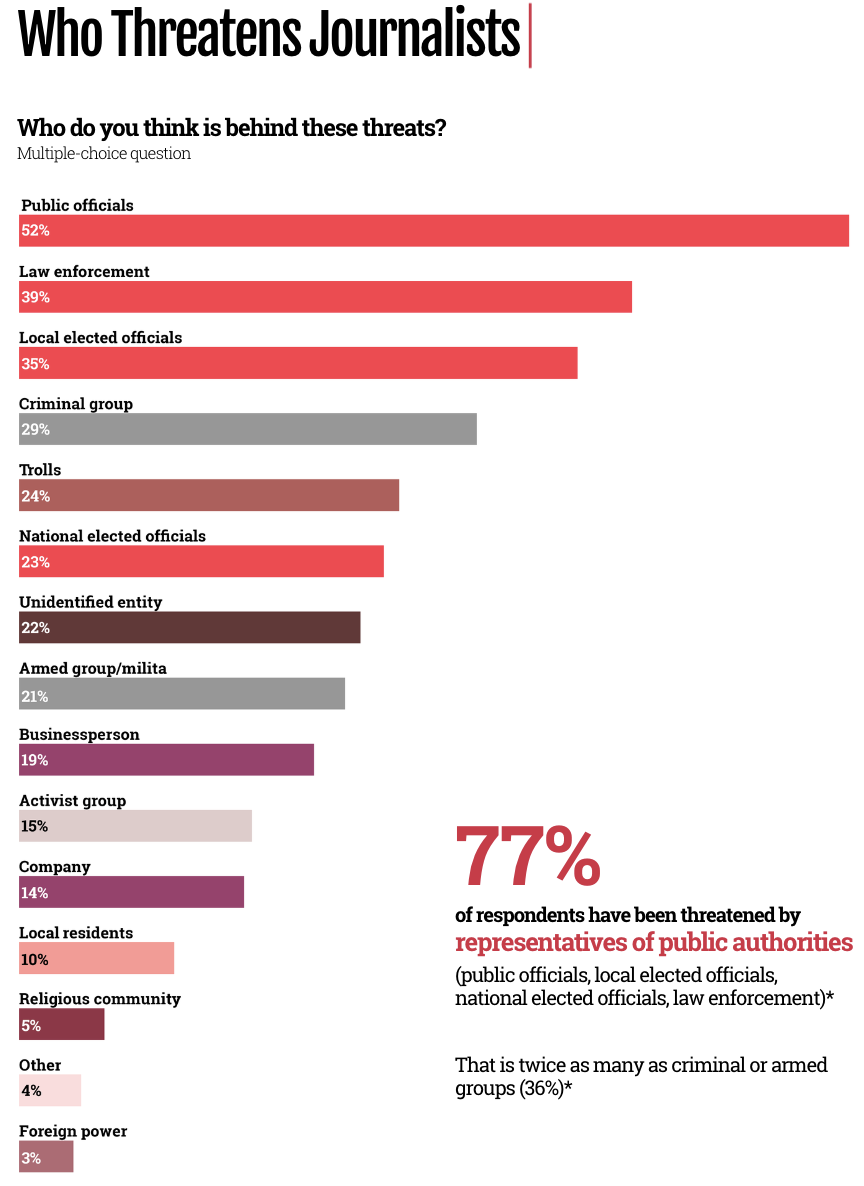
The most threatening actors are not criminal or armed groups (responsible for threats against 36% of respondents), as one might assume, but representatives of public authorities (77%). The most dangerous topics? Corruption (63%), human rights violations (59%), organized crime (34%) and environmental crimes (30%).

When people try to silence a story, make it louder

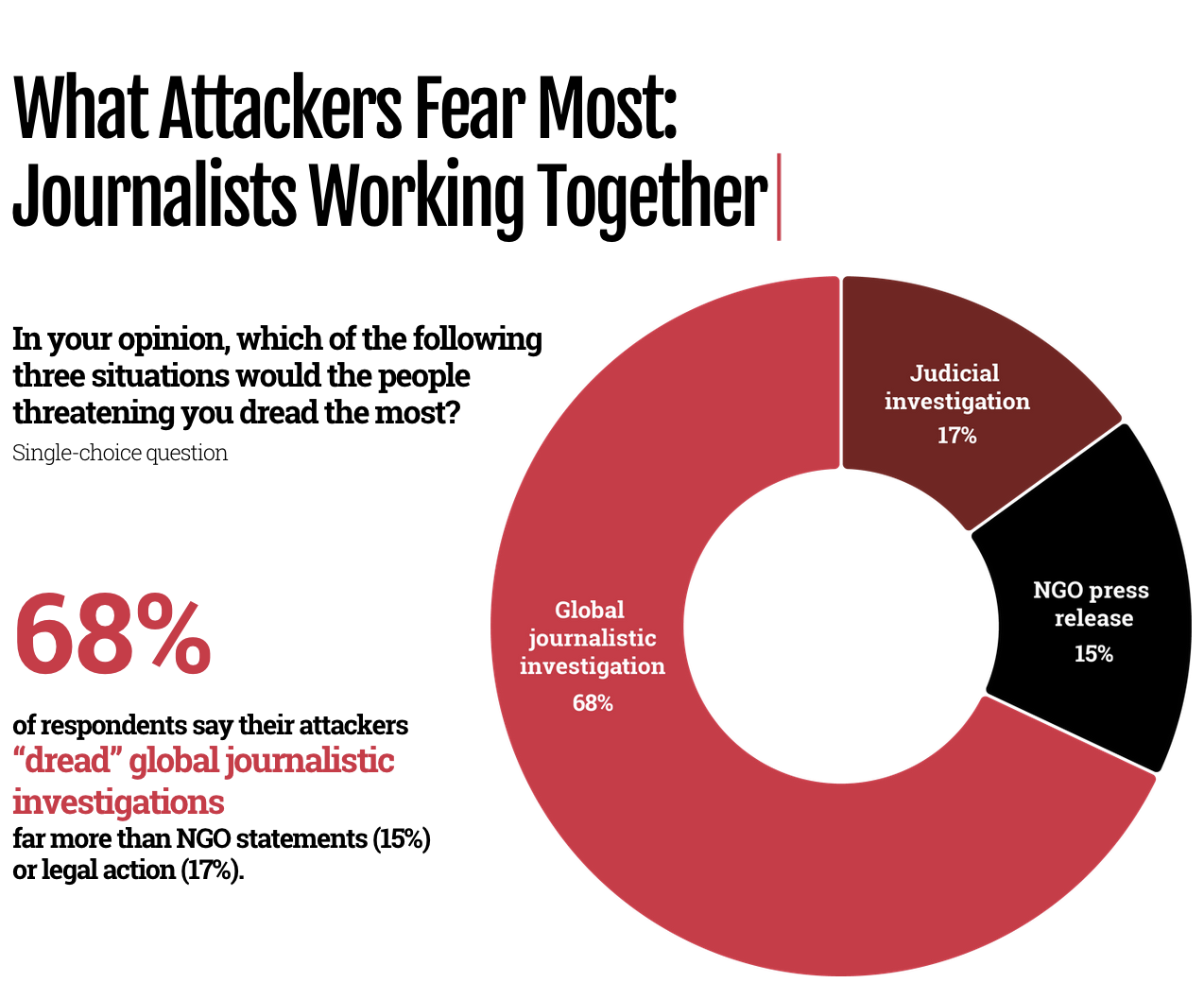
Above all, the survey’s most important finding is that 68% of the journalists we consulted say their attackers “dread” global journalistic investigations far more than NGO statements (15%) or legal action (17%).

This is a clear signal. Many have lost trust in their country’s justice systems to protect journalists from threats: 88% of respondents did not file a complaint following the threat, or did so, but the complaint was unsuccessful. According to some of the most threatened journalists, the most effective response after threats or attacks lies in a collective, coordinated journalistic response. When people try to silence a story, make it louder.

This is a call for journalists worldwide to join forces. It is the only way to stand up to the enemies of the press – and ultimately to deter them in a systemic way. 83% of the journalists surveyed say those targeting them could be concerned about international investigations into their assets and activities abroad, such as real estate, bank accounts, supply chains or political links.

This is a call for journalists worldwide to join forces. It is the only way to stand up to the enemies of the press – and ultimately to deter them in a systemic way. 83% of the journalists surveyed say those targeting them could be concerned about international investigations into their assets and activities abroad, such as real estate, bank accounts, supply chains or political links.

In a globalized world, press freedom can only be defended globally.

“Several politicians in Ecuador told me that they now think twice before trying to silence us.”

For several years, Forbidden Stories has been developing a system to secure threatened journalists’ sensitive information. If they are arrested, kidnapped, or killed, their work will be carried forward by dozens of media outlets around the world.

Known as the SafeBox Network, this mechanism is currently used by over 250 reporters. Local press freedom organizations referred these journalists to Forbidden Stories in response to the attacks they have endured – one survived a targeted shooting, another was kidnapped on the street, another is the subject of an international arrest warrant, and a majority (59%) have received threatening messages because of their reporting.

Forbidden Stories mobilized this unique network of highly threatened journalists to respond to the survey (78% of respondents). For the first time at this scale, we concretely measured the effectiveness of the SafeBox Network: 75% of its members report feeling “more protected” and/or “less isolated” since securing their ongoing investigations with Forbidden Stories.

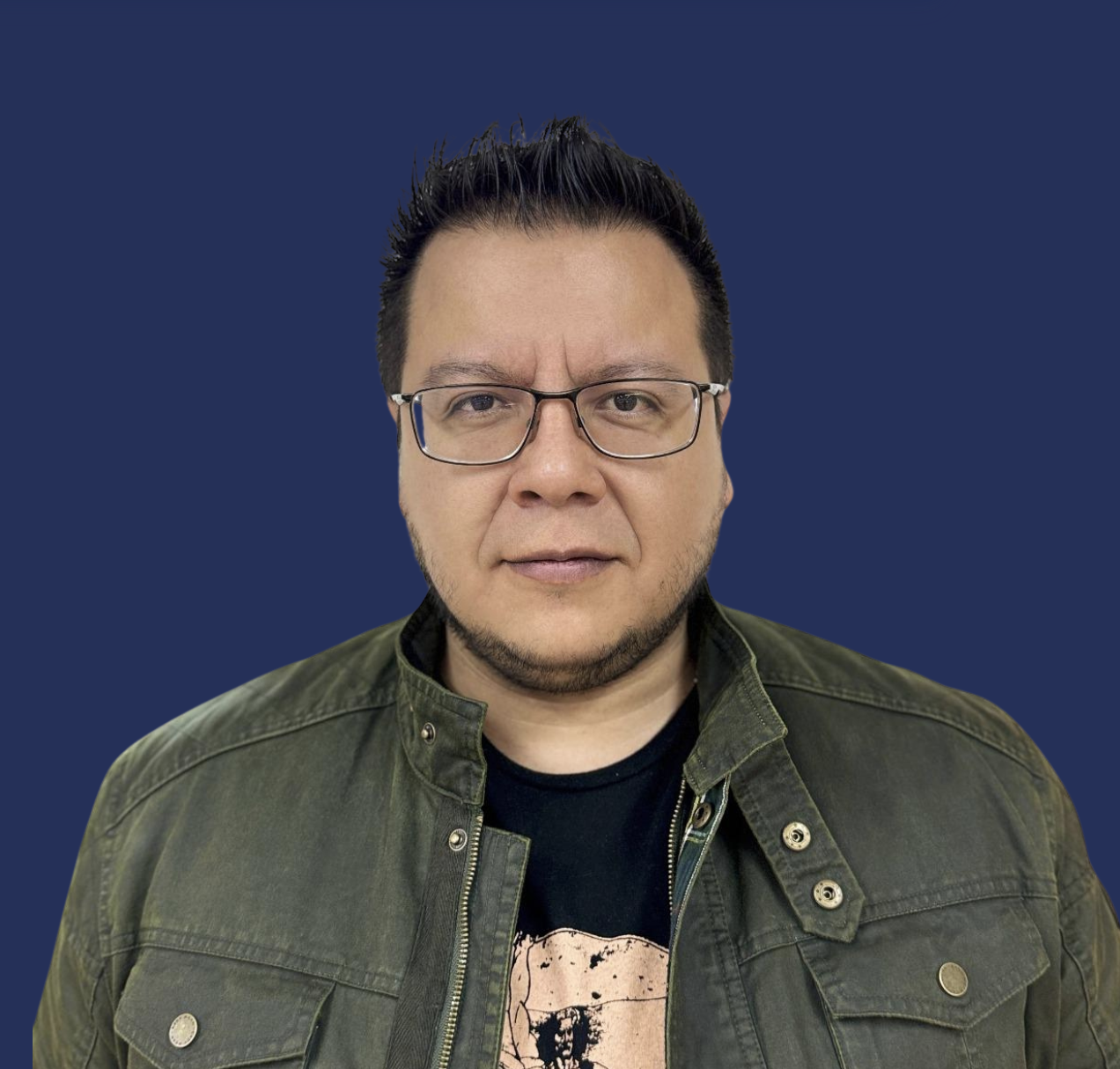
Leonardo G. Ponce, Ecuadorian journalist, editor-in-chief of Tierra de Nadie, SafeBox Network member

Most importantly, two-thirds report a change after publicly disclosing their membership – particularly a decrease in threats or a less aggressive attitude from those they investigate

“When we publish a new investigation, we publicly state that the information is protected by SafeBox. Several politicians in Ecuador told me that they now think twice before trying to silence us,” says journalist and SafeBox Network member Leonardo G. Ponce.

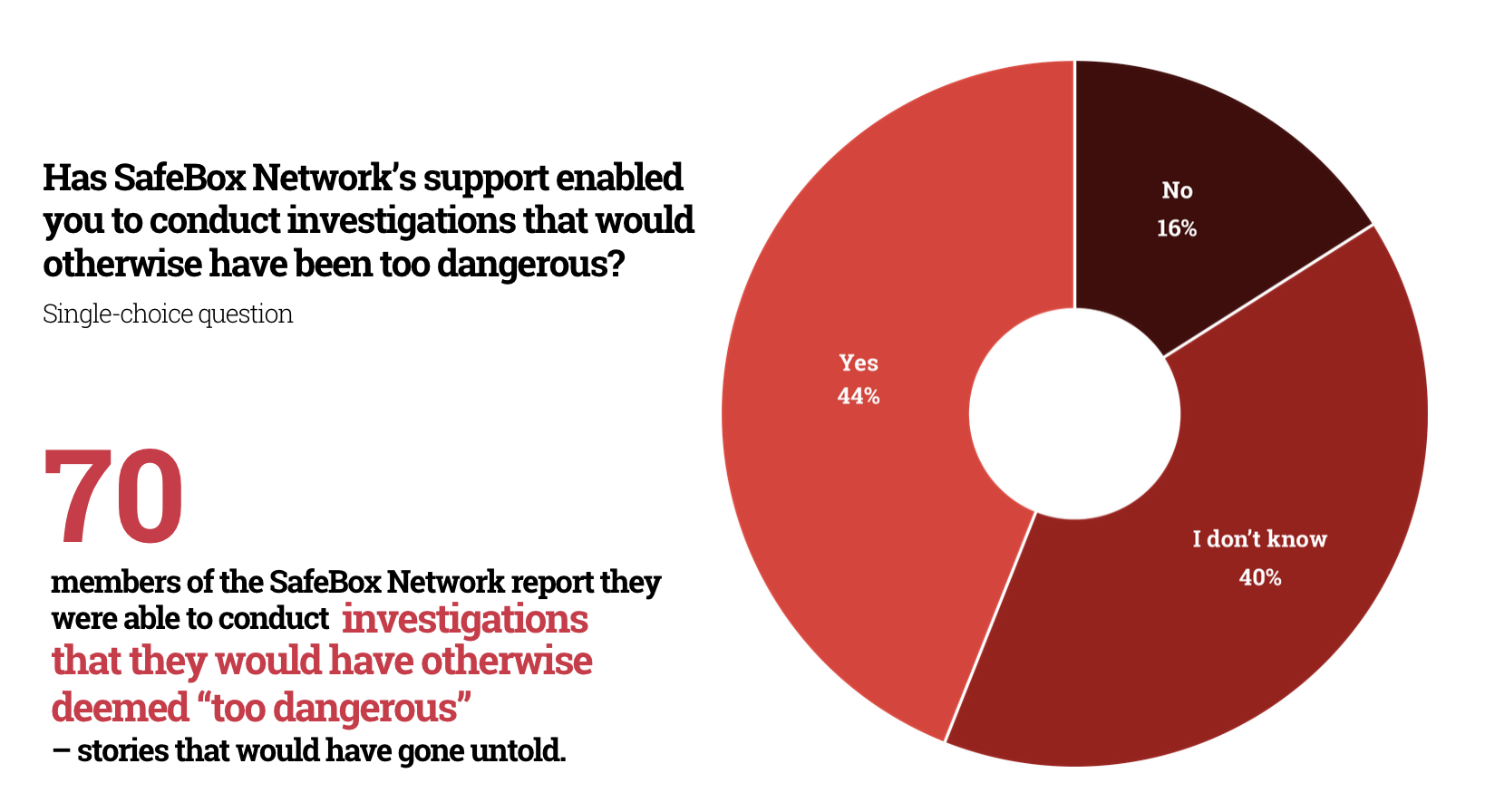
The survey revealed a very tangible effect: 70 journalists in the SafeBox Network report they were able to conduct investigations that they would have otherwise deemed “too dangerous,” thanks to feeling supported by peers around the world who are ready to take over if anything happens to them. This is the power of deterrence: An international solidarity network of journalists enables hundreds of investigations that challenge powerful interests to emerge at the local level.

The findings of this survey shed light on the most effective ways to shift the balance of power. Through threats, public officials, criminal groups and corporations influence the free flow of information. Deterrence, rather than reacting too late, is a path to empower journalists. At Forbidden Stories, we will work in the coming months and years to scale up the SafeBox Network, which has proven effective, so that it becomes a widely known mechanism.

There is an urgent need to implement these concrete solutions, as threats continue to take a toll on journalists worldwide. Without journalists, there can be no reliable information, and humanity cannot confront the greatest challenges of our time.

Support us so that we can continue investigating

We need your help to expose what the enemies of the press try to keep quiet.

Press contact

Emma Chailloux (+33 7 44 87 82 07) – emma@forbiddenstories.org

Latest news

Our latest stories

36
COVER-V2
Cover (2)
AES_couverture