Khai Vo
Vietnamese. Removed to Eswatini. Original interview in English.
Anabela
Honduran. Removed to Mexico. Original interview in Spanish.
Muhammad*
Guinean. Removed to Ghana. Original interview in French.
Moussa*
Muhammad*'s uncle. In New York, US. Original interview in English.
Nika*
Iranian. Removed to the Central African Republic. Original interview in Farsi.
Meredyth Yoon
Lawyer representing third country removal cases in Atlanta, US. Original interview in English.
I came to the United States right after the Vietnam War, in 1984.
I left Honduras because of the insecurity and because there was almost no room for people of a different sexual orientation. That was about 30 years ago, around 1992.
After they overthrew the government in Guinea [in 2021], they started looking for people who were involved in the opposition party [the RPG, the party of former President Alpha Condé]. One day, they came to arrest me, beat me and took me to prison. My family “in America” began negotiating for me to leave the country as soon as possible because, if they caught me again, they would hurt me… They might even kill me.
I lost too many of my friends. They [the Islamic Republic of Iran] killed them. And some of them are still in prison. I know if I was in Iran, they’re going to kill me. [She arrived in the US in late 2024].
I lived in the United States for about 42 years. I got in trouble with the law. I had an argument with a person and I let the anger take the better of me. So you know, I came in for attempted murder. And then I served my time for 13 years. From 1995 to like 2007, but I served my time and got out. I went to court and signed a deportation order [which could not be carried out because Vietnam long refused to take back those who fled during the Vietnam War]. And I reported to [Immigration and Customs Enforcement, ICE] every year. I was living an ordinary life. For 18 years, I was a changed man. I took whatever job I could get as an ex-felon, just to get by. I was a regular citizen, paying my taxes, going to work, supporting my family.
When I arrived in the US, I was in California first, then Los Angeles, and in the 2000s I moved to Texas. I had my family and everything, but because of my sexual orientation—I’m part of the LGBT+ community and I’m a trans woman… I eventually made a life of my own.
I was living in New York, still waiting to receive my work papers. So I was doing small jobs to get a little money for transportation and expenses. Then a judge told me: “I cannot accept your asylum claim, but I will give you protection from being sent back to your country of origin because you have serious problems there, I can already see that.” My lawyer had also assured me that I had protection and would be allowed to stay in the country.
On May 28, I was released from Richwood Immigration Detention Center in Louisiana pursuant to a court order and traveled to Los Angeles. I was initially instructed to report to ICE on June 18, but officers later called my uncle and told me to report on June 8 instead. I went to the ICE office as instructed, where they verified my identity and gave me another appointment for December 8. Then, they told me I was free to leave.
They were living their lives in the US In many cases, they’d been here for decades. They had families, children who are US citizens, jobs and were contributing to the economy. Some were medical care workers. One person who was deported had cared for people during COVID.
My plan was to seek asylum in the United States, to feel protected and live there, because I could no longer live in my own country. I didn’t trust any other country in Africa. To me, they were all the same.
I had the opportunity to live out [of prison] there for 18 years. So if you label me “a monster,” then why did you keep me out there in the real world for all those years?
On March 17, 2025, at the ICE check-in, they handcuffed me right away and told me I had a deportation order to go back to Vietnam. I accepted it. I already knew this might happen. I’m in my 50s… What was I going to do? Run?
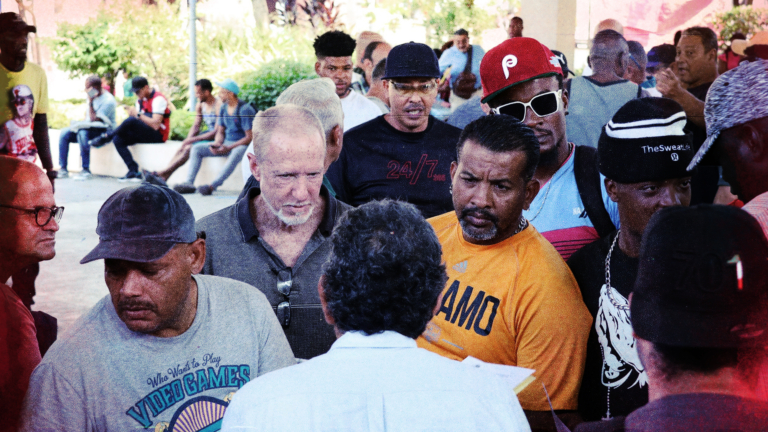
It was a normal, ordinary day, like any other. We were at a park in Dallas with friends, sharing food and drinks, looking at the buildings around Reunion Tower and the Trinity River. We always used to go to that place, I don’t know why that day was different. They [immigration agents] arrived and simply ordered us to go with them. It was horrible. I never thought it would come to this.
I was sleeping at my cousin’s house in Connecticut when the federal police came. They surrounded the house and started making noise, which woke me up. They broke down the door and came inside. I was terrified and tried to escape through the front door, but the house was already surrounded and I couldn’t get out. They called me by my name: “Come out. It’s okay. Just put your hands in the air.” They took me into custody and they told me that I was “illegal” and asked me to find a lawyer. They said that if I didn’t have one, they could help me find one. At the time, I could barely express myself in English, so I didn’t really know what was happening. They told me that was the law.
At the ICE office, one of the officers told me to wait. He returned with a female officer, and they told me to put my hands above my head and arrested me. They took me to the basement of the same building. When I asked why I was being arrested, they said that they wanted to send me to a “third country:” the Central African Republic (CAR). That night, they transferred me to a detention facility in California. After 24 hours, they transferred me back to the place where I had originally been arrested.
Many people who are deported to third countries have withholding of removal or protection under the Convention Against Torture, rather than asylum. To qualify for withholding of removal, they have already demonstrated a greater than 50% chance that they would be persecuted or tortured if returned to their home country.
At ICE in Dallas, the two women who interviewed me even told me, “We see that you have withholding [of removal]. You’re going to leave right now.” So I thought, great. They asked if I had someone to call, and I said no, that I lived nearby and could walk. Looking back, I should have taken her at her word. I was supposed to see an immigration judge, but no judge ever showed up. I don’t think most of the people on that bus ever saw one either. We spent more than 15 days at the detention center in Alvarado, Texas, supposedly waiting for a judge. The immigration detention centers there are kept at terrible temperatures, around 40 or 50 degrees celsius.
Sometimes I still think, “I’m such a dummy. Why did I check in, knowing that they could send me back?” You have your morals and your sense of responsibility, and then you’re put in this predicament… It questions you, it questions your whole integrity. And on top of that, they’re taking away my freedom when I already served my time [in prison].
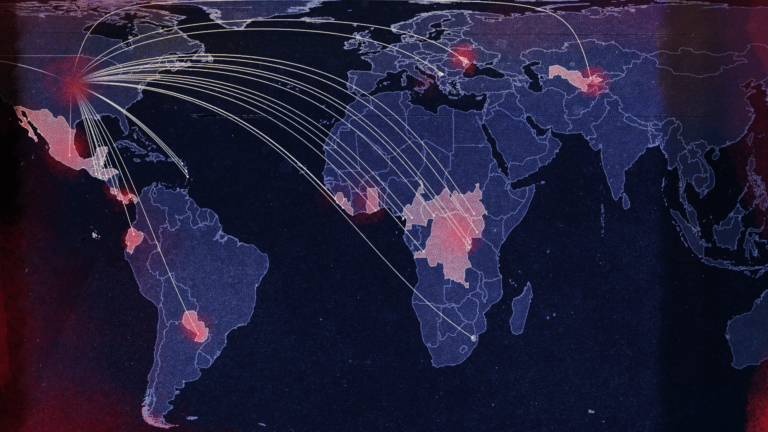
ICE redetains them, puts them on a plane, and they don’t find out where they’re going until the plane is over the Atlantic Ocean, or sometimes even over Africa.
One of the guys saw the paperwork with the name of the country on it: “Eswatini.” Everybody freaked out. None of the 10 of our group had any ties to Africa. We hadn’t agreed to go there, we had signed to go to our respective countries. We asked to speak to our attorneys, but they didn’t give us that opportunity. Instead, they threatened to shackle us and drag us out of the cell if we didn’t collaborate.
I traveled from Los Angeles to Louisiana with two ICE officers on a commercial flight. When we arrived in Louisiana, I was taken to the Richwood Immigration Detention Center and, less than 12 hours later, transferred to the airport for my removal flight to the CAR. I had been told that I would have an opportunity to speak with an ICE officer, but no one ever spoke to me about my case. Throughout the transfer, my legs were shackled and my hands were handcuffed to a chain around my waist. The restraints were not removed for more than 24 hours.
I spent about a month in my first detention, in Massachusetts, before they transferred me to Texas, near the Mexican border. Then they [immigration agents] told me that I would be sent to a third country because I couldn’t return to my home country. I said: “You gave me protection here.” But they said that that protection didn’t guarantee me anything and added “You’re going to leave the US” They kept threatening me, saying they would chain me up, put me on a plane and drop me in a country like Sierra Leone or Uganda. One morning, they told me to pack my things because I was leaving. They didn’t tell my lawyer. They didn’t even tell me what was happening.
When a person expresses a fear of being sent to a particular country, they’re entitled to a process, a “fear interview,” where they can present the basis of their claim to a US asylum officer. Instead, under the Trump administration’s third country deportation policy, the US government is claiming it has received diplomatic assurances from the receiving country that the person will not be subjected to persecution or torture
In my case, I think it was something more terrible than an injustice. I don’t know if it was premeditated, but I don’t understand why they took us out with a group of people by land [and not by plane], as if to leave fewer traces. They knew from the beginning that they couldn’t legally deport me. The police took us to the station and kept us there for three or four days. Then they told us there was an immigration hold and that ICE was coming for us. That’s when the ordeal began.
The thing I’m most upset about is that they didn’t give him a chance. They treated him like an animal and sent him out without giving him the due process he was still entitled to. They should have waited and given him a chance, but they didn’t. After all the sacrifices he made to get here, to just send him back like that… It hurts.
We were still chained when they took us to the airport and put us on a chartered plane. I saw that our final destination was Ghana. We flew to Senegal, where they refueled without letting us off, and then continued to Ghana. When we landed in Accra, they took us off the plane and handed us over to immigration without any papers or anything.
We had no idea what was going to happen to us. For the entire 24-hour flight, we kept wondering: What kind of country is this? How are they going to treat us? Why are we here? It felt like we had been kidnapped and trafficked to another country. The whole time, we were thinking about the worst-case scenario.
In detention, some people were already struggling with psychological problems, and many ended up freaking out. Then they moved us to Louisiana, only to bring us back to Texas. There was no coordination between the authorities. It was a mess. What “tortured us” most was the way they moved us, with our hands and feet shackled and chained together. They didn’t care.
During the flight, the restraints stayed on. Some men who resisted sitting down were put in full-body restraints, thrown to the floor and lifted back up while still restrained. My hands and feet swelled and hurt badly. I cried and begged them to loosen the restraints, but they laughed and said no. Even for meals, they did not free our hands, making it practically impossible to eat.
I was the first one in my group to get off the plane, still shackled, and I looked around at the whole scene and thought: “Wow, how did I get into this? What did I do to deserve this?” It was surreal and terrifying… Something that none of us ever imagined.
They sent us to a hotel [in Ghana] and told us: “You’re here with your African brothers, so nothing will happen to you.” We were reassured. We thought that they had signed an agreement with the Americans and that they would protect us; that maybe we would stay there and they would take care of us. But they never gave us our phones back. They told us, “We negotiated everything with the Americans. You won’t have your phones, passports or personal belongings. They’ll all stay with us. Your final destination will be your home country.”
They didn’t tell us anything. They couldn’t speak English, and when we asked questions, they answered in French, which we didn’t understand either. When we arrived, we were given yellow fever vaccines and taken to a government-protected apartment where IOM [International Organization for Migration] staff were present. Four days later, I contracted malaria and was hospitalized. For 10 days, I had no access to my prescribed medications for my heart condition or depression and stress disorder. The medication sent from the US never arrived, and they are not available to buy in the CAR, either; so a local doctor prescribed substitutes.
When they refouled me back to Conakry, Guinea, they pretended in front of the immigration officers that everything was fine. My family came to meet me and I left the airport, but then the authorities took me away. They told me, “We’ve been watching you. We had all the information about you.” They first took me to a small prison, then to the central prison. A military officer told me I was a threat to the government because I could organize an uprising against the regime. That’s why they detained me.
After a week, the other migrants were given their passports and temporary visas. I was told that no passport had been provided for me by the US When I entered the country, I had my passport with me, but US border officers took it from me. More than a month later [back in July], I still have no legal documentation allowing me to stay in CAR.
What Mexico used to suffer from, with so much violence and so many terrible things, or what countries in South and Central America have experienced… All that “evil” has moved there, to the United States: a country governed by laws that had become a “magnet” for so many people looking for a chance to breathe and build a better life.
Until we got into this building, then they took away our shackle from our ankle to our wrist … then they put us into our cell. We feel like we didn't do anything wrong to be in this country, incarcerated, still locked up right now. I’m still here [in Eswatini], biting the bullet and hoping I can get out soon, see my family again and get my life back together, to live my life again as a free man. Things have gotten a little better. Thanks to the IOM, we have someone speaking for us here, telling the government that we’re not the “monsters” that the US portrayed us as. But I don’t know what they’re waiting for.
I’m not sure whether these replacement medications that they gave me are suitable for long-term treatment, but I have no alternative. We don’t feel safe going outside. Even on the way to the hospital, people stared at us. I also saw armed military personnel and UN vehicles heading toward areas where there had reportedly been security incidents, and I heard about another migrant who went out for just five minutes to charge his phone and was stopped by a police officer who demanded money from him.
[After being imprisoned in Guinea again, Muhammad finally managed to leave the country and came back to Ghana]. When I arrived in Accra, they gave me 60 days to stay in the country. I stayed with my family’s support and found a place in a small neighborhood. I’m staying legally in Ghana, but I don’t really feel safe because I don’t know whether they could send me back to my country. I have no family here and no one else to rely on. They gave me a one-year residence permit to study English, but once the course is over, I have to leave the country.
[Moussa’s deportation] was a lot, but we had no power. There was nothing we could do. My wife was devastated. He’s a very good guy: quiet, respectful, hardworking, no problems at all. He had almost finished college in Guinea. We got to know his character during the months that he spent with us before they took him. He came here to study, finish school and hopefully find work, like any young man trying to build a future and make something of himself. There were opportunities here for young people like him. His friends were doing well, and we thought it would be the same for him. But it didn’t happen.
I’m really struggling with depression. I get sick often, and I’m suffering psychologically because I’ve come close to death several times. I just want to be protected and have some peace of mind. I’m only 23, and I should be building a career and a better life, not living with this kind of stress. I have rights, and they shouldn’t be violated like this.
Realistically, I think we may have to wait until this Trump administration is over before it becomes easier for us to return to Vietnam. And then… I’ll be going back to a country I know nothing about. I wasn’t raised in Vietnam; I can’t read or write there. I’m going back with nothing and will have to start from scratch. It’s hard enough as it is. But looking back, I’m just glad to be out of [the US] It was a nightmare.
The immigration judicial system [in the United States] is no longer functioning because court decisions are no longer being respected. What was decided in immigration court by an immigration judge is no longer being honored.
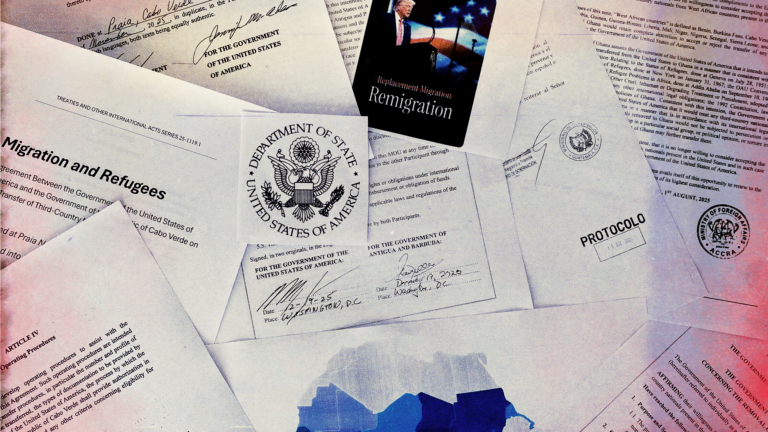
You’re seeing far-right movements in Europe who are embracing the concept [of remigration] and calling for immigrants to be expelled from Europe, calling for tightening the EU border regime. It's boomeranged back to the United States, and we now have under President Trump and Secretary of State Marco Rubio, the Office of Remigration within the US Department of State. So it is really a blatant embrace of this white supremacist concept.
For those of us being deported to a third country, it doesn’t make sense. Vietnam is taking people, so why are we [Vietnamese citizens] here? That’s why I’m telling my story: to show people what I’m going through, because it feels inhumane and unjust. There are a lot of guys still waiting to go back to their countries. Hopefully, by telling our stories, we can get some answers and Vietnam can see that we’re just regular people trying to follow the law and go home and live our lives.
They just need to correct what they did to me in America. I want the world to see what they did to me, because it was not normal.