- Reading time: 12 min.
Trump’s Policies Leave Thousands in Immigration Limbo in Mexico
Between January 2025 and August 2026, the Trump administration removed 25,427 people to so-called third countries. Nearly 20,000 of them were sent to the Mexican states of Chiapas and Tabasco, near the Guatemalan border. Forbidden Stories traveled there to interview people affected by this deportation policy, most of them Cubans over 50. Many said they were not given a meaningful opportunity to raise fears of persecution before being removed.
Crédit : Mélody da Fonseca / Forbidden Stories
- Of the 25,427 third country nationals removed from the United States by the Trump administration between January 2025 and August 2026, nearly 20,000 (about 80 percent) were removed to Mexico.
- In interviews with Forbidden Stories in southern Mexico, people described transfers from the US lasting more than 30 hours by bus. Many said they were given little food or water, were shackled for extended periods, and were often not told where they were being taken.
- Most people interviewed said they were not given a meaningful opportunity to raise fears of persecution in their home or a third country, a foundational principle under international law.
By Sofía Álvarez Jurado (Forbidden Stories)
September 23th, 2026
Additional reporting by Léa Peruchon, Magdalena Hervada (Forbidden Stories), Mathieu Tourliere (Proceso)
In 1979, Lorenzo Sánchez, then a teenager who was born in Guantánamo, Cuba, faced a life-altering decision. He was studying to become an assembly mechanic in the heavy machinery industry when he said Fidel Castro’s government began following him.
He claims the regime targeted him for his political ideas. He fled Cuba on a boat bound for the United States. He perceived America as a land of economic opportunity and refuge from violence and believed he would be free there.
Castro had come into power two decades earlier, in 1959, a year before Sánchez was born. Under Castro, Cuba rapidly shifted from a market economy heavily dependent on the US to a centralized socialist system. The US embargo imposed in 1962, along with escalating tensions between the two countries, further isolated Cuba’s economy. The Cuban government began restricting emigration to curb political opposition and prevent the loss of skilled workers.
By April 1980, social unrest had reached a breaking point. In response, Castro opened the port of Mariel to those wanting to leave, in what became known as the Mariel boatlift. Sánchez was one of roughly 125,000 Cubans who arrived in the US that year. About 85,000 would ultimately settle down in the Miami and south Florida area.
When Sánchez first arrived in Miami, Florida, he had no relatives and no plan. He remembers being warmly received by US officials, religious groups, and civil society organizations that had mobilized to welcome the “Marielitos” as they arrived. He was soon transferred to Wisconsin, where the government provided him shelter, food, and he recalled with a smile, “even cigars.”
Most “Marielitos” later became US permanent residents and citizens. In 1985, Sánchez had spent months learning English while working at a museum and school when he applied for US residency but was denied. “I don’t know why,” he said. “I hadn’t committed any crime.” He maintained a valid work permit and was required to report and sign in at monthly immigration check-ins.
In 1991, he was sentenced to 36 months in prison after a street fight with a local. He made the most of his time behind bars, earning certificates in cabinet making, blueprint reading, and technical drawing. In 1994, when he was released, he stopped attending his immigration check-ins. A couple of years later, he relocated to Florida. Several decades passed while Sánchez built a life in Florida.
“Dogs live better than we do, and they eat every day”
In June, 2025, Sánchez was drinking a beer on the beach when he was arrested for public consumption of alcohol, which is prohibited on some beaches in Florida and sent to a detention facility. There, a records check revealed a deportation order dating from 1991, issued after his arrest following the street fight and his non-compliance with immigration check-ins.
Immigration and Customs Enforcement (ICE) agents soon took him to a detention center in Miami. Months earlier, diabetes had forced him to have the toes on his left foot amputated. After a week or two, as he recalled, still recovering from his amputation, he was transferred to a hospital in El Paso, Texas. There, law enforcement agents told him he would be deported to Cuba. He did not resist.
Upon his release from the hospital in El Paso, US border officials took Sánchez across the border. Sánchez thought he was headed to Cuba, but halfway through the journey, officials told him, “You’re going to Mexico. Cuba doesn’t want you.” He arrived in Piedras Negras, Mexico, where Mexican border agents put him on another bus to Villahermosa, Tabasco, a city he had never visited and where he knew no one. Sánchez said the journey took three days.

Lorenzo Sánchez holding a picture of himself taken by Amparito Shelter workers on the day when he got his Mexican residence approved, in Villahermosa, Mexico. Credit: Sofía Álvarez Jurado (Forbidden Stories).

Approximate reconstruction of the path that Lorenzo Sánchez followed since he was arrested in the US and until arriving in Villahermosa, Mexico. Credit: Sofía Álvarez Jurado (Forbidden Stories).
In May, 2026 Forbidden Stories met Sánchez in Villahermosa, where he had been living on the streets for at least five months. When he first arrived in Mexico, he spent 150 days at Amparito Shelter, a private humanitarian refuge that provides temporary accommodation for those in need. When he could no longer stay there, Sánchez was left in the streets. He described suffering from insect bites and having difficulty accessing water, food, and medication. “Dogs live better than we do, and they eat every day,” he said about his experience in Mexico. Still recovering from surgery and in his mid-60s, he was unfit for work. “Sometimes, I’d rather just be dead already,” he said.
Transfers in defiance of international law
In January, 2025, US President Donald Trump returned to office and swiftly issued a series of executive orders. One called “Securing our Borders,” directed the State Department to coordinate with the Attorney General and Department of Homeland Security to advance international agreements facilitating so-called “third country removals,” bypassing the standard deportation process to a person’s country of origin. A February 2026 report by the US Senate Committee on Foreign Relations said the administration had “dramatically expanded” these practices, reflecting “a troubling shift in how the United States [was] exercising power.”
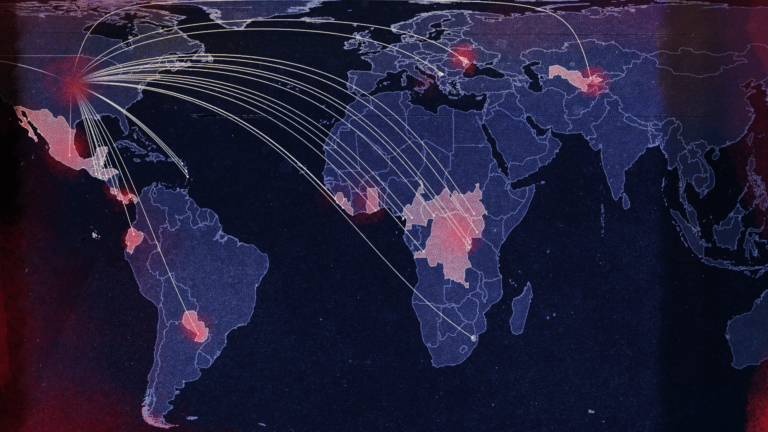
For “The Deportation Project” Forbidden Stories spent six months investigating the Trump administration’s policy of “third country removals,” a government removal of a person to a country other than their country of origin. From January, 2025 until August, 2026, the Trump Administration removed at least 25,427 third country nationals, negotiated secret deals with 35 countries, and deported people to 28 of those countries.
No credible fear interview
Our international consortium of 72 journalists from 26 media organizations interviewed 35 people removed to countries to which they had no ties. Under international law, countries must offer people facing removal the possibility of claiming “fear of persecution,” a genuine threat to life in their country of origin or a third country.
Under US law, when a person subject to expedited removal–a fast-track immigration process that allows the deportation of a noncitizen without a hearing–tells US Customs and Border Protection (CBP) or ICE that they intend to apply for asylum and fear persecution in their country of origin, they are entitled to a “credible fear interview.” The interview, required under US law and conducted by an asylum officer with the US Citizenship and Immigration Services, is a pivotal step in the asylum process and provides people the opportunity to establish valid risks of return.
Most people we interviewed were not given credible fear interviews and were unable to claim a fear of persecution in their home or third countries. Many were not informed to which country they would be deported until they arrived.
Meredyth Yoon, Litigation Director at Asian Americans Advancing Justice, told our consortium that in many cases, people transit through a third country before they are “quickly” refouled back to their countries of origin, even when they had proven that they would more likely than not face persecution or torture there. Additionally, she explained that many of them, while still in immigration detention in the US, and sometimes upon arrival in a third country, were being “detained indefinitely in deplorable conditions without access to medical care [or] life-saving medications.”
Among the countries that have received third country nationals from the US, Mexico stands out. Despite no public agreement on US removals to Mexico, it has received some 20,000 deportees, the highest number anywhere, according to Third Country Deportation Watch, a tracking site run by Refugees International and Human Rights First. Our consortium found that Mexico received more than the next top three receiving countries combined: Guatemala (at least 2,981), Costa Rica (at least 599), and Honduras (at least 543).
Unlike other countries receiving third country nationals from the US, people do not arrive in Mexico by plane, but in a more secretive way: by bus. A report by Human Rights Watch (HRW) identified four main land deportation routes: crossing via San Ysidro-Tijuana, Nogales-Sonora, El Paso-Juárez and Port Isabel-Matamoros. From these border crossings, Mexican officials take legal control and transfer people to two cities near the border with Guatemala: Villahermosa, the capital of Tabasco state and an oil and gas hub; and Tapachula, in Chiapas state, a gateway for migrants traveling north. According to interviewees, the transfers often last more than 30 hours, during which they remain shackled and are barely fed.
Cubans are the largest nationality group sent to Mexico from the US. The report by HRW identified some 4,300 Cubans deported to Mexico between January, 2025 and March, 2026. Historically, Cuba and the US had no agreement permitting the regular return of deportees. Over time, many Cubans “came to believe that deportation was no longer possible,” the report found Cubans like Sánchez, who had pending deportation orders, were often allowed to remain in the US under ICE supervision, with required check-ins.
A one-way journey to Villahermosa
Last Spring, when Forbidden Stories traveled to southern Mexico, our team met Vicente, a 60-year-old Cuban who crossed the Darién Gap, one of the world’s most dangerous migration routes, in 2023. Vicente, who preferred to use a pseudonym, feared US immigration agents might identify and prevent him from reuniting with his family.
In 2009, he left Cuba for Venezuela under a Cuba-Venezuela Bilateral Cooperation Agreement. There, he met his wife, had children, and built a career as a baseball coach, eventually training players who went on to the professional ranks. Disillusioned with Cuban politics, he remained in Venezuela. But after a decade there, he began receiving threats from the Technical Investigation Directorate of Cuba’s Ministry of the Interior, a specialized investigative body within the Cuban law enforcement and internal security apparatus. According to Vicente, agents from this bureau called him “stateless” and “a traitor” and threatened that his family would “pay the price.” Meanwhile, conditions in Venezuela were deteriorating, too; with millions unable to access basic healthcare and adequate nutrition, social unrest spread across the country. In 2023, Vicente decided to leave for the US, determined to build a better future for his youngest son, who was then nine.
From Venezuela, he waited for an appointment through the CBP One app, a platform created by former President Joe Biden’s administration as the designated pathway for requesting asylum at the US-Mexico border, but none opened up. A friend then told him about a group of people planning to travel across the Rio Grande, along the Texas-Mexico border, into the US, and he decided to join them. When the group of approximately 300 people arrived on US soil that August, they were intercepted by US authorities.
Vicente was among 21 people separated from the group and taken to prison in Texas, where he spent 23 days. Having crossed the border illegally, he attended a court hearing, during which the police presented no evidence, and he was released. But as he was leaving the facility, ICE officials took him into custody and returned him to Port Isabel. There, he began yet another legal process, hired an attorney, and presented evidence for an asylum claim, including the threats he said he had received in Venezuela. But his claim was denied, and he was issued a deportation order.
From Port Isabel, where the prison was “saturated” with people, Vicente was transferred to the Geauga County Safety Center, an ICE facility in Cleveland. He spent 90 days there, waiting for the Cuban government to claim him. When that did not happen, his stepson, who lived in the US, secured his release. On Christmas day, 2023, Vicente reunited with his wife and son in Ontario, California, after the two had recently made the trip via the Darién Gap and were released by border agents.
Vicente hoped to obtain a pardon for having entered the country illegally and was working with a lawyer to secure formal residency in the US. He never missed an ICE check-in. Around August, 2025, he went for a routine check-in, a process he had grown accustomed to, in which an ICE officer typically reviewed his status, verified his personal information, and updated his reporting schedule. On this occasion, though, an agent brought him to a different room for fingerprinting. “It was all a lie. A set-up. When I walked through the door, four agents were waiting for me. They handcuffed my hands, legs, and feet, and told me not to resist.

Vicente* (name changed for security reasons), wearing a Cuba t-shirt, stands in his rented house in Villahermosa, in front of the cage he built for breeding Japanese quail. Credit: Sofía Álvarez Jurado (Forbidden Stories).

Approximate reconstruction of the path that Vicente* followed since he was arrested in the US and until arriving in Villahermosa, Mexico. Credit: Sofía Álvarez Jurado (Forbidden Stories).
Vicente was then taken to a detention center in what he described as “a basement” in Los Angeles. Over 80 people were held in a space that, he said, “could only have comfortably hosted 10.” After four days, some were put on a bus to Arizona, and from Arizona to El Paso, Texas, to Camp East Montana, a former Japanese-American internment camp that he described as “a concentration camp.” In a recent report, HRW and the American Civil Liberties Union found that people detained at Camp East Montana endured “conditions of confinement that amounted to enforced disappearance, cruel, degrading and inhuman treatment, excessive use of force including one extrajudicial killing, life-threatening medical neglect, barriers to legal representation, and coercive third country removals.”
“I haven’t committed any felonies. I haven’t done anything. There’s nothing I’ve done that justifies why I was separated from my family”
Since arriving in Villahermosa in August, 2025, he has been living in a roughly 15m2 concrete-block house. While still obtaining work authorization in Mexico, he volunteers coaching a youth baseball team. He has also built an incubator for breeding Japanese quail, which are commonly raised in Mexico for meat and egg production. “I don’t know how to do anything other than work,” he told Forbidden Stories.
“I haven’t committed any felonies. I haven’t done anything. There’s nothing I’ve done that justifies why I was separated from my family,” he said. The separation from his family, who remains in Ontario (California), has been grueling. Last Christmas, they sent him a photograph of the fireplace in their family home, with stockings embroidered with each family member’s name, including his, Vicente explained as he broke into tears. “It’s hard to know that you’re present but you’re not really there,” he said.
Cast away to a foreign country
Increasing rates of third country arrivals and an immigration system operating at capacity, leaves Mexico’s local civil society shelters and community refuges, often with few resources, to fill the gap.
In Villahermosa, the Amparito Shelter, originally established to house families of patients at a nearby hospital, quickly expanded to include deportees. Its spokesperson, Josué Martínez Leal, told Forbidden Stories that for those who had previous criminal convictions, the Trump administration’s policy of removing them from the country after having completed their prison term amounted to a “logic of double punishment.” “We identified that between 90 and 95% of those we took in had already served their time [in jail],” he said. “The moment they set foot out of jail, ICE was waiting for them.”
When Forbidden Stories visited, the shelter had 10 temporary beds for men, with stays generally limited to two nights. But exceptions are frequent, as vulnerable people are consistently arriving.

Male bedroom at the Amparito Shelter in Villahermosa, where some of the third country nationals (but also Mexican nationals in need) stay temporarily. Credit: Sofía Álvarez Jurado (Forbidden Stories).

Female bedroom at the Amparito Shelter in Villahermosa, where some of the third country nationals (but also Mexican nationals in need) stay temporarily. Credit: Sofía Álvarez Jurado (Forbidden Stories).

A mural displayed at the Casa del Caminante Shelter in Palenque, showing different train routes throughout Mexico, as well as shelter options in the country. Credit: Sofía Álvarez Jurado (Forbidden Stories).

Main space of the Casa del Caminante Shelter in Palenque, where third country nationals (but also Mexican nationals in need) stay temporarily. Credit: Sofía Álvarez Jurado (Forbidden Stories).
Casa del Caminante Shelter, some 100 km from Villahermosa in Palenque, near the UNESCO-listed Maya ruins deep in the Chiapas jungle, has also become a destination for third country nationals. When our consortium visited the shelter, three Cuban men were staying there; the eldest was 68 years old. Evelinda Ramírez Gallegos, the shelter’s psychologist, said it was “heartbreaking” to see people cast away to a country they had no ties to, after decades of building lives in the US. Most, she said, did not want to be in Mexico, citing extreme heat, lack of work opportunities, or difficulty accessing retirement benefits. “The US doesn’t want them, their own countries won’t take them, and somehow Mexico becomes the last option,” she said.
“If this de facto statelessness prevents them from obtaining identity documents or accessing basic rights such as healthcare, it could constitute a legal violation attributable to Mexico”
Many arrive in Mexico without documents or identification, which ICE confiscates when they are detained and often does not return; this is a particular challenge for Cubans, whom Cuba often refuses to readmit after years abroad and who face near impossible bureaucratic hurdles to reissue identification documents. “If this de facto statelessness prevents them from obtaining identity documents or accessing basic rights such as healthcare, it could constitute a legal violation attributable to Mexico,” Ian Kysel, a Clinical Professor of Law at Cornell Law School and a Visiting Scholar at Stanford Law School and the Center for Advanced Study in the Behavioral Sciences at Stanford University said. “In the context of bilateral cooperation in which Mexico knew that migrants’ countries would not accept the return of their nationals, some of those international law violations could also be attributable to the US,” he said.

José Alejandro Aponte standing in front of the Amparito Shelter in Villahermosa. Credit: Sofía Álvarez Jurado (Forbidden Stories).
José Alejandro Aponte, a 65-year-old Cuban, also stayed briefly at Amparito and now lives in a small room that he rents in the center of Villahermosa. When Forbidden Stories spoke to him, he had just been refused residency in Mexico. “I tried to comply with every rule. Now I’m in immigration limbo. I have no papers to go anywhere. I may lose contact with my family because phone companies are requiring people to link their numbers to a valid identity document. How are we supposed to do that?”According to Aponte, the Mexican government is to blame: “Why would [President Sheinbaum] accept Trump’s offer to bring us here, if they weren’t going to give us a place to live, the possibility to work?”
“I tried to comply with every rule. Now I’m in immigration limbo”
Sánchez agreed. “How can you accept people deported from another country only to leave them on the street, to fend for themselves like dogs, hungry and in need? They are violating human rights. It doesn’t matter who you are—the worst or the best. We’re human.” Mexico’s Foreign Affairs and Interior ministries did not respond to our consortium’s questions. They said that Mexico has not signed an agreement with the US to receive foreign nationals, but accepts people returned from the US on humanitarian grounds and offers eligible migrants regularization, asylum, or assisted return to their country of origin. The president’s office said it had nothing further to add.
Tonatiuh Guillén López was the former commissioner of Mexico’s Instituto Nacional de Migración, the country’s immigration enforcement agency under the supervision of the Interior Ministry, during part of President Andrés Manuel López Obrador’s term. Guillén told Forbidden Stories that, with negotiations beginning as early as 2018, Mexico ultimately aligned its migration policy with that of the US, in 2019. Guillén claimed this was not the result of a formal agreement but a policy Mexico accepted under mounting US pressure, including demands to militarize migration enforcement.
Asked about the institution’s role in third country removals from the US to Mexico, Guillén described it as an act of “cruelty.” He also stressed that “the more people on the move, the more organized crime groups stand to gain.”
Guillén, who began his role in December, 2018, resigned in June, 2019, amid one of the sharpest diplomatic disputes between Mexico and the US in recent years. He departed after Mexico agreed with Washington to avert a possible trade war in exchange for measures to curb the flow of migrants toward the US border. He was replaced by Francisco Garduño, a former prison official who oversaw the militarization of Mexico’s immigration apparatus and was later prosecuted (in January, 2025, the judge overseeing the case approved suspending the criminal proceedings on the condition that Garduño carried out a series of compensatory measures) over the deaths of 40 migrants in a fire at a detention center in Ciudad Juárez.“The paradox is that, in the end, it’s the US economy that stands to lose,” Guillén said about the removal program.
Meanwhile, thousands of third country nationals remain stranded in Mexico, unable to work. Many of them, like Vicente, are simply waiting to see their loved ones again.“I only want to be reunited with them,” he said. “But there’s the uncertainty of time. I’m not 20 years old anymore. It can’t be in 10 years.” Others have accepted their fate in Mexico. Sánchez, who was eventually recognized as a refugee, is now settling into long-term shelter in Guanajuato.
See also