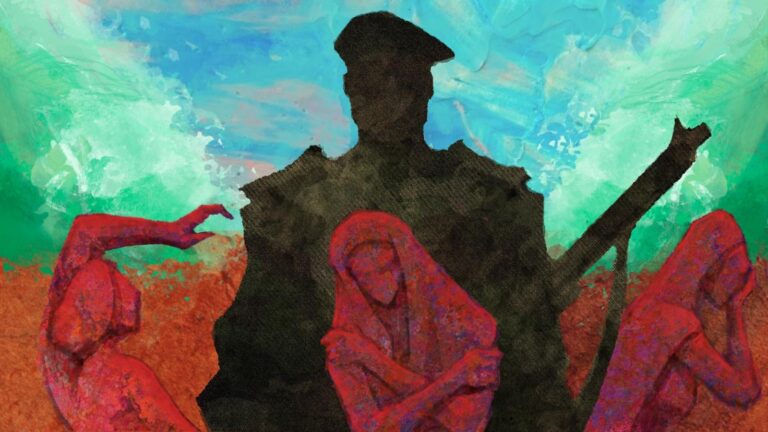
Killing the journalist won’t kill the story.

Mozambique Exposed

In Mozambique, a death broadcast live and a taboo on pollution

In late 2024, a young Mozambican blogger named Mano Shottas was shot and killed while live streaming a protest against pollution linked to the transport of chromium ore. Since then, illegal dumping has persisted along the border with South Africa, with little response from the authorities. The few whistleblowers have been the target of death threats.

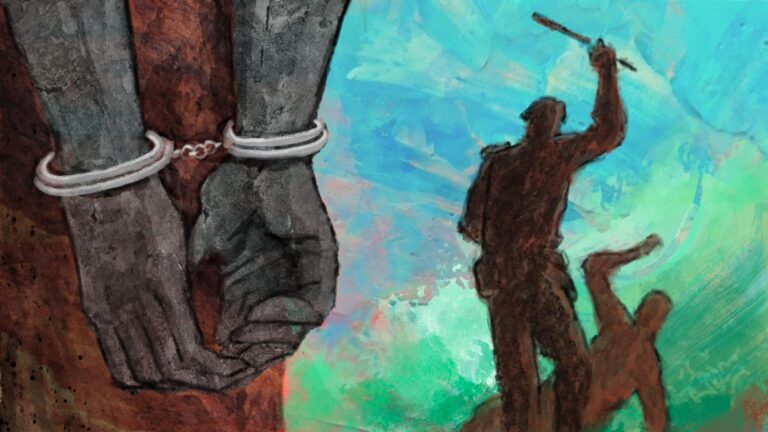
The entrance to a chrome mine in South Africa that sends its chrome to the port of Maputo, Mozambique, and a picture of blogger Mano Shottas (Credit: Forbidden Stories. AI was used in the creation of this image).

Key findings
  • A new analysis of footage and audio recorded by a young blogger, Mano Shottas, strongly suggests the involvement of Mozambican law enforcement in his shooting death in December 2024.
  • On the ground, the rampant pollution along the border between South Africa and Mozambique — which protesters denounced on the day of Shottas’s death — continues.
  • South African whistleblowers speaking out against this pollution are the targets of intimidation and death threats.

By Alexander Abdelilah

October 22, 2026

Struck by a bullet, a man collapses to the ground. His phone continues to record as the footage goes black.

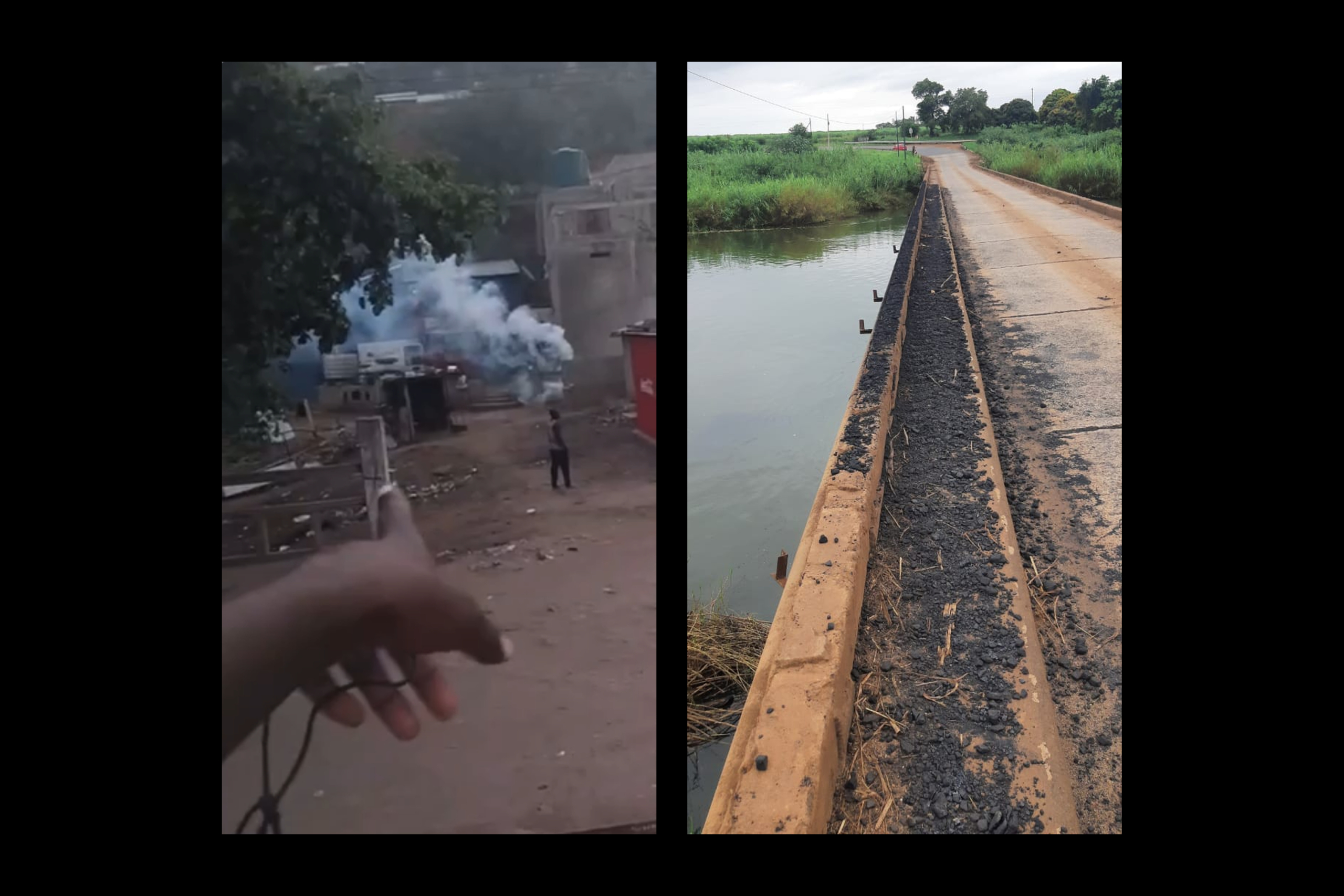
Unbeknownst to the shooter, the scene is being broadcast live on the Facebook account of the young blogger he has just hit: Albino Sibia, better known as Mano Shottas. His final moments continue to haunt a regime accustomed to impunity. Forbidden Stories was able to recover a two-minute, 24-second clip from the video filmed on the day of his death, Dec. 12, 2024. In it, Shottas captures a tense standoff between protesters and law enforcement in Ressano Garcia, a small town in southern Mozambique bordering South Africa. Officers are shown positioned on the road in front of him, as he comments on the clouds of tear gas approaching what he says is a house with children inside. Gunfire rings out around him.

Over the previous 18 months, Shottas had kept the residents of his town informed via Facebook. He made a name for himself through his live streams, covering protests, local news and even water pollution in the region from his phone. This led to his arrest in January 2024, according to a source close to Shottas. “They took him to prison, to a secret place, where they charged us 50,000 (meticals) to get him out,” the source said. That’s the equivalent of about 700 euros, or several months’ salary in Mozambique.

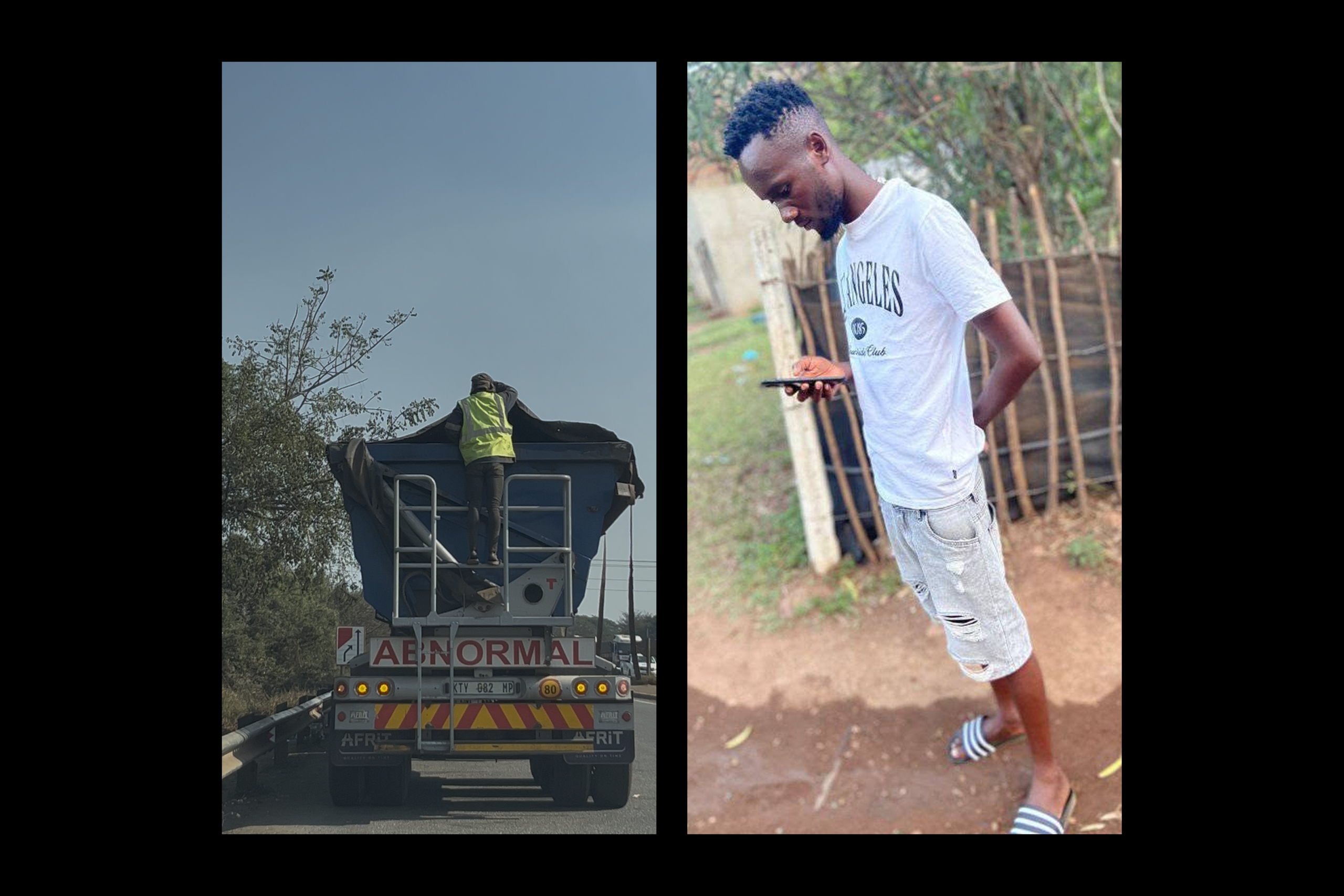
A dump truck being covered with a tarp at the border between South Africa and Mozambique (left) and a picture of Mano Shottas posted on his Facebook page (right).

Less than a minute after being wounded, Shottas found the strength to turn the camera toward himself. “I’ve been shot. I’ve been shot, and they keep shooting,” he said in a flat voice. With his face pressed against the asphalt, the 30-year-old father had just broadcast his last words. His death was confirmed a few hours later.

By analyzing open-source information and videos filmed at the protest site, Forbidden Stories demonstrated the involvement of law enforcement in Shottas’s death. The investigation entailed travelling to the South African border town of Komatipoort to verify whether soil contamination along the Komati River persisted — carrying on the work that cost Shottas his life.

South Africa’s chromium trade route

As Shottas recorded his final video, Mozambique was in the midst of social unrest following the October 2024 general elections, which were marred by widespread fraud and contested by the opposition. Law enforcement responded with a crackdown that left more than 300 people dead.

But the demonstration Shottas covered that day was different. Protesters had blocked the road upon learning that trucks loaded with chromite ore were once again driving through Ressano Garcia. It’s a sight the locals are all too familiar with. Every day, more than a thousand trucks carrying chromium and other minerals from neighboring South Africa clog the village’s roads on their way to the Port of Maputo on the Indian Ocean coast, less than a hundred kilometers away, according to figures provided by a South African expert. The shipments of chromite ore allegedly pollute the Komati River, which flows through the border.

In reporting on the protest, Shottas took on an extremely powerful industry. The trucks that crowd the Lebombo border crossing are only the most visible part of international trade flows. About a thousand dump trucks a day unload chromium, coal or magnetite from South Africa onto ships docked in the port of Mozambique’s capital. This method of road transport is considered more reliable than rail freight, or even exporting metals via South African ports. It’s a windfall for one of the world’s poorest countries.

“Around 75% to 80% of the world’s chrome ore (is extracted) in South Africa,” said Luke Nickels, an analyst with The Signal Group. “If we go back to 2022, (Maputo) is kind of the origin pool for around 57% to 60% of all the chrome ore exports that we track. … Almost 85% of those exports go into China.” Key to a sector valued at over three billion euros, the “Maputo Corridor” is an especially risky topic to cover. Chromite is a strategic raw material: When processed into ferrochrome, it is used to manufacture stainless steel, a vital resource for the global industry.

A screenshot from Mano Shottas’s last Facebook Live (left) and a photo of an illegal dumping site on the South African side of the border (right).

A journey on the road between South Africa and Mozambique quickly reveals the problem’s magnitude. The border separating the two countries runs along the vast Kruger National Park, where tourists from around the world come on safaris in search of lions, elephants and giraffes.

Trucks carrying ore become an increasingly frequent sight as Komatipoort draws nearer, eventually forming a continuous line several hundred meters long at the entrance to the border town. Black and gray patches multiply along the road, formed by deposits of coal and chromium ore. The chromium is recognizable by its sparkle, transforming some roadside verges into carpets of glitter. The wind sweeps up the ore and scatters it near the adjacent Komati River.

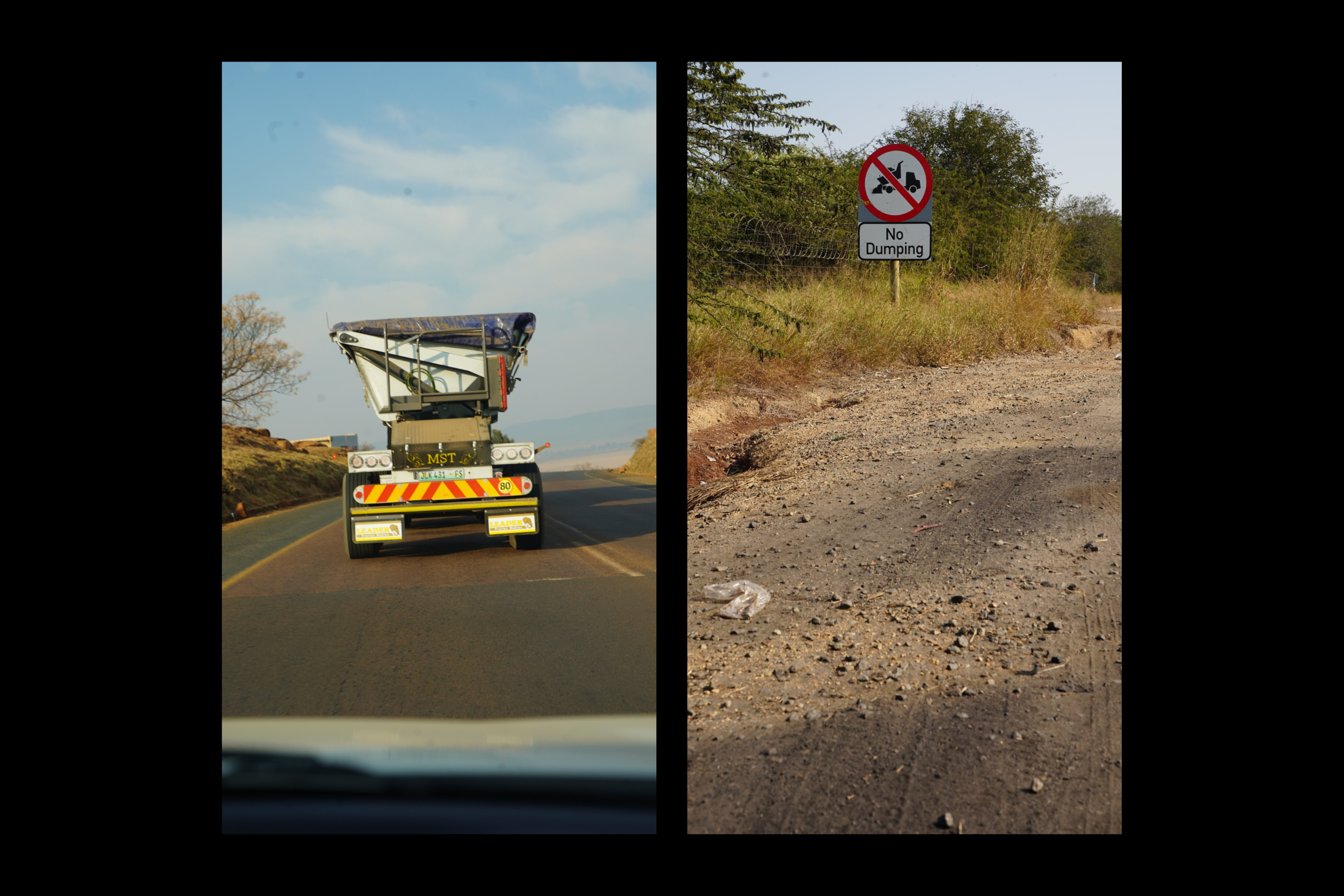
These deposits occur when the trucks return from Mozambique empty. They must first pass back through the border with the tarps removed from their cargo beds for inspection. Once they’re across, on their way to their South African logistics base, most stop along the roadside and put the tarps back in place to save on fuel. This is the job of young men sat waiting for them behind the guardrails. When a dump truck stops, they climb up the side in a matter of seconds and reattach the tarps for the modest sum of 10 rand, or 50 euro cents. It is usually during this process that the containers tip over, spilling mineral powders onto the ground.

Trucks loaded with minerals cross the Mozambican border at Komatipoort to transport their cargo to the port of Maputo, polluting the soil and waterways along the way (Credit: Forbidden Stories).

South African authorities have been unable to resolve the problem, despite having been alerted to it. “We basically just received a confirmation letter that they did receive (our complaint),” said Lambert de Klerk, head of environmental affairs for the NGO AfriForum. The letter, reviewed by Forbidden Stories, was sent in February 2024 to the environmental ministry and the Department of Mineral Resources in Pretoria. It demands an “urgent investigation into and enforcement of environmental legislation regarding the illegal dumping of minerals in the Komatipoort area,” citing in particular “a significant threat to the community’s health, agricultural heartland and the overall environmental well-being.” 

As early as 2023, a resident of Komatipoort also attempted to alert environmental authorities to the issue. She claims to have provided water and soil analyses to support her concerns, as well as photos of “dead fish, dead plants, dead animals,” which she attributes to pollution caused by ore dumps near the border. But to no avail. “Absolutely nothing was done. Nothing,” she said. The woman only ever received anonymous threats in return. “They literally phoned me and said I must keep my mouth shut, because they know where my family lives and they know who my children are,” she said quietly. Several years later, she is still terrified.

A dump truck on the road (left) and illegally dumped ore in front of a “No Dumping” sign near the border between South Africa and Mozambique (right).

The same thing happened to Andrew,* a farmer Forbidden Stories met from Komatipoort. He, too, wished to speak anonymously for fear of reprisals. He recalled men in the transport sector telling him that they knew “guys that can sort you out” for causing trouble. Andrew’s only crime was worrying about how illegally dumping chromium and other minerals might leave lasting impacts on water supplies and soil quality. “This is a farming community, and we’ve got very good farming soil here,” Andrew said. “(The ore) goes into a river or a pond, and you don’t know what the effects are going to be over a few years. Some guys are farming organic fruits, and now you’ve got this stuff going into your fields.” Exposure to chromium is highly toxic to both humans and wildlife, according to several studies. Possible effects include cancer, respiratory diseases and reduced crop yields.

When asked, the Department of Forestry, Fisheries and the Environment explained that it had issued directives to “four trucking companies whose trucks were suspected to have perpetuated illegal disposal of waste alongside the N4 in Komatipoort. … However, without any evidence of any substance to the commission of an environmental crime, the investigation (into the companies) stalled and ran aground.” The authority nevertheless assured Forbidden Stories that it was continuing to investigate these incidents of pollution, which take place in “the middle of the night or the early morning hours to avoid detection.” The Department of Mineral and Petroleum Resources did not respond to questions when contacted.

As with all minerals, the chromium supply chain remains opaque. Several intermediaries may lie between the mine and the truck that dumps its cargo on the roadside. Forbidden Stories obtained a purchase document showing that chromium is transported from the Sefateng Chrome Mine, located in the Limpopo region of northeastern South Africa, to the Port of Maputo, where it is loaded onto container ships.

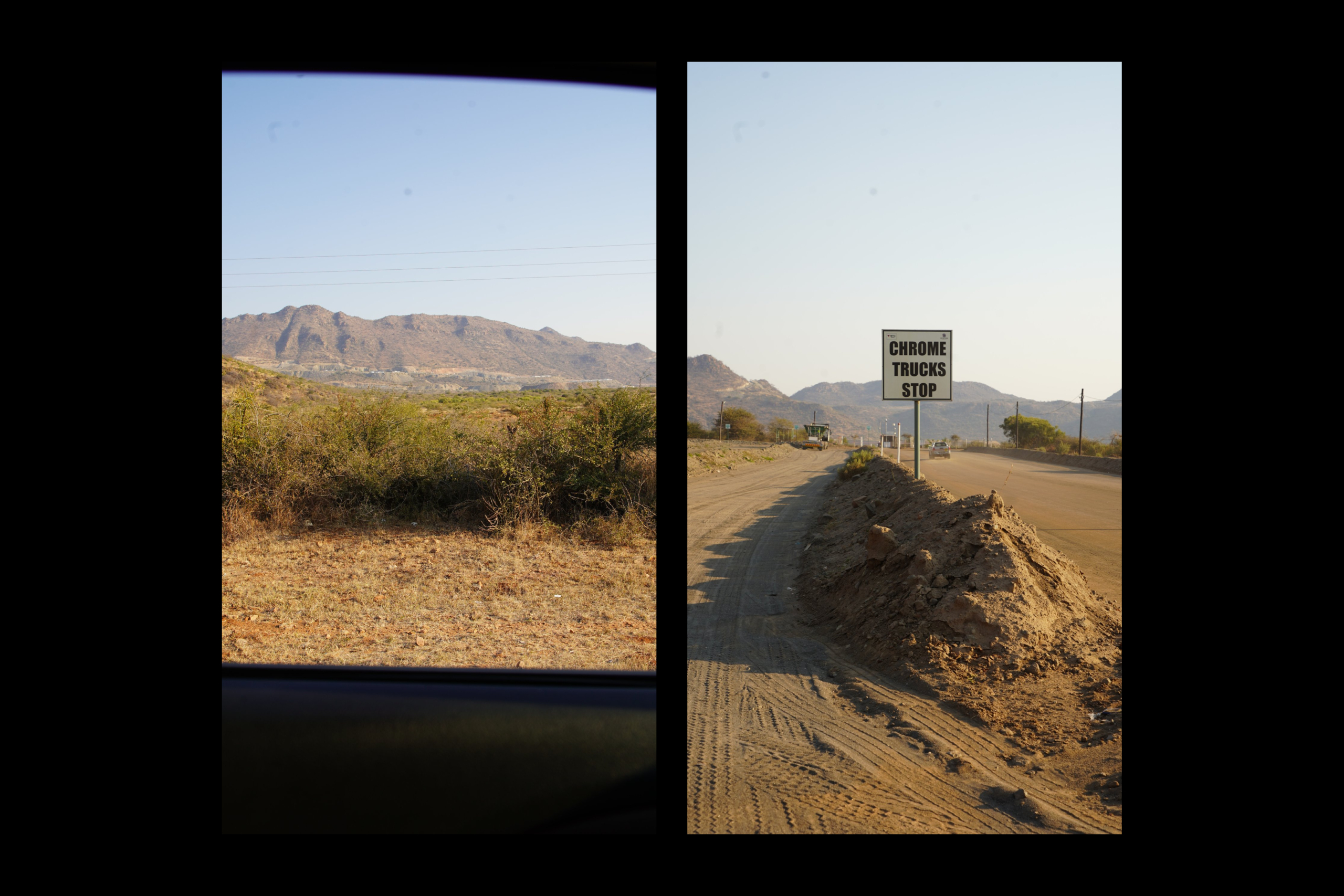
To reach the Sefateng Chrome Mine from the border, the road winds through vast, majestic landscapes: from the savanna to the mountain ranges where the Limpopo mines are nestled, passing through red-earth plateaus and citrus groves stretching as far as the eye can see. It is from the town of Tsibeng, crossed by a straight, two-lane road, that the mine comes into view. A trench carved directly into the mountain, stretching several hundred meters, is the starting point for some of the trucks tasked with transporting the precious ore to the Port of Maputo. The mine did not respond to questions about this trade route and incidents of dumping. The transport company, however, explained that it has “established systems and operational controls designed to prevent unauthorised off-loading.”

The Sefateng Chrome Mine as seen from the road (left) and a sign at the mine entrance (right).

According to customs data shared by The Counter, a research service of the NGO SOMO, more than 800 million euros worth of chromite and ferrochrome from South Africa left the Port of Maputo between January 2025 and May 2026. That amounts to 2.6 million metric tons. Most of it was shipped to Asia for use in stainless steel production, before being directed toward the automotive, cosmetics and construction industries around the world.

In Ressano Garcia, a mere transit point for these goods, Shottas’s acquaintance Isabel* will long remember the day her life was turned upside down. She was watching the blogger’s live stream when the first bullet hit him. He called her right after. “I asked, ‘Where are you?’ He’d been shot, and they wouldn’t let anyone help him, wouldn’t let him be taken away from where he was,” Isabel said. 

A video filmed from a different angle, after the live stream ended, confirms this account. It shows Shottas lying on the ground, with the police having backed away several dozen meters. No one comes to his aid. Even worse: “When he rang me, I remember they shot him a second time,” Isabel recounted. “He just wanted a better Mozambique.”

Despite repeated follow-ups, neither the Mozambican justice ministry nor the Ministry of the Interior responded to Forbidden Stories’ questions.

On Dec. 30, 2024, the Mozambican human rights group Centro para Democracia e Direitos Humanos filed a complaint in administrative court to hold the state civilly liable for Shottas’s death. Since then, the authorities have turned a deaf ear. No investigation has been announced.


*Name has been changed to protect anonymity.

Protect your stories

Are you a journalist under threat because of your reporting? Secure your information with Forbidden Stories.

Read also

signal-2026-06-04-164840_005
signal-2026-06-05-163918_002
signal-2026-06-04-164625_003-1-1