- Temps de lecture : 10 min.
“Let the whole world know”
In Cameroon, investigating deportees from the United States can lead to detention
On Feb. 17, 2026, four Cameroonian journalists were detained in Yaoundé for entering a center secretly holding deportees from the United States. After a six-month investigation, Forbidden Stories is publishing the testimonies of two women the journalists interviewed before being arrested, along with details of a secret immigration agreement between Washington and Yaoundé.
Credit: Mélody da Fonseca / Forbidden Stories
- Cameroon and the United States secretly reached a migration agreement that was never made public. It was accompanied by a payment of $30 million to UNHCR's Cameroon office, and followed by bilateral economic talks a few months later.
- Four journalists were detained and their equipment confiscated after investigating deportations from the United States to Cameroon. Forbidden Stories spoke with two of them.
- Forbidden Stories tracked down the two women the journalists interviewed in a detention center before being arrested. Now, it is publishing their testimonies.
By Léa Peruchon
Septembre 21th, 2026
Additional reporting: Florence Morice (RFI), David Rich (France 24) and Sofía Álvarez Jurado (Forbidden Stories)
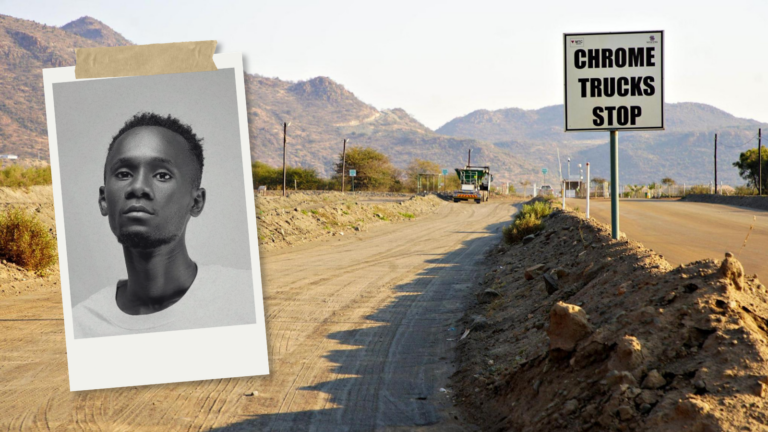
On Tuesday, Feb. 17, 2026, journalist Nalova Akua walked through the gate of an unmarked building in Yaoundé, the capital of Cameroon.
Accompanied by a lawyer, he was reporting freelance for the American news agency the Associated Press, or AP. “From the outside, you wouldn’t even imagine this is a deportation center,” he said. “It looks like a small health clinic. There are no guards preventing entry; anyone can come and go.”
On a balcony, Akua quickly interviewed two women detained at the center. A month earlier, the United States had deported them to Cameroon, a country neither had ever set foot in. Just before Akua left, one of the women pleaded with him. “Let the whole world know that we’re not being treated well,” she said. “We’re dying here. We’re suffering.”
Akua would not have time to keep his promise. A few minutes later, the center’s director intercepted him, along with several colleagues: a videographer and a photographer — also on assignment for AP that day — and a freelance journalist. All are Cameroonian and work for local and international media outlets. What happened next was a blur: The police took them into custody and confiscated their equipment. The recording of the two women, whose lives had just been turned upside down, would never be published.
This installment of The Deportation Project investigates why and how the reporters were censored that day, through the testimonies of Akua and one of his colleagues, who wished to remain anonymous. Months later, Forbidden Stories tracked down the two women they interviewed, shedding light on the mechanisms behind the United States’ deportations to Cameroon.
“Who are you? Who brought you here?”
“Don’t take any photos!” These were the words of Cameroonian lawyer Joseph Awah Fru, as Akua reported. On Tuesday, Feb. 17, the four journalists arrived at the center in Yaoundé, located between the headquarters of the General Delegation for National Security and the judicial police. The day before, a plane from the United States had landed with eight deportees on board: two women and six men, originally from Sierra Leone, Senegal, the Democratic Republic of the Congo, Ethiopia and Kenya.
A screenshot of an article on the second deportation flight arriving in Yaoundé, co-written by Nalova Akua for the Associated Press on Feb. 16, 2026.
Everything changed after the videographer on Akua’s team took a few shots inside the center. A center official interrupted them: “Who are you? Why are you taking photos? Who gave you permission? Who brought you here?” Akua recalled him asking. Within minutes, the number of plainclothes police officers around them grew from two to about 10, including two police commissioners.
The higher-ranking commissioner escorted the team to the judicial police’s criminal investigation department. The second journalist present that day, Akua’s anonymous colleague, remembers his warning: “This is a sensitive case.” He agreed, for the first time, to recount his version of events to Forbidden Stories.
“We had to play it cool, stay calm and not push back,” said the reporter, who quickly understood the commissioner’s message. In Cameroon, just two names are enough to remind journalists of the risks they face. “We have Wazizi, we have Martinez Zogo, and there are plenty of others in prison who don’t even know when they’ll be tried.” Samuel Wazizi died in military custody in 2019 after covering the Anglophone Crisis; Martinez Zogo, a radio host, was abducted and then killed in January 2023 after investigating allegations of corruption at the highest levels of government. Neither case has ever been fully resolved.
Cell phones, voice recorders, cameras: Everything was confiscated. The interrogations began around 3:00 p.m. “Who are you? Who do you work for? What were your intentions in interviewing these people? What did you ask them?” Akua recalled being questioned. “We answered very honestly.”
Two of the team were placed in a “holding cell” with about 10 other people. The journalist who requested anonymity recalled that, ironically, seven were Cameroonians, some of whom had been deported from the United States. They were recognizable by their pidgin, an English-based creole mixed with the local language and spoken in Cameroon, Nigeria and Ghana. A police officer saw the journalist talking with his cellmates and suspected him of trying to gather information. “He pushed me, and I fell,” the journalist said. “He then forced me to sit in the corner where people urinate.” Months later, he is determined to set the record straight after several newspapers reported that he had been beaten while in custody. “I was mistreated, yes — verbally and physically. But beaten? No. I wasn’t hit.”
Around 8:00 p.m., the team was released without their equipment. It took a week — with a different excuse given each day — before they got it back. But there was a steep price to pay. “We were forced to delete the footage,” the anonymous journalist said. The team hadn’t made any copies.
What the Cameroonian authorities wanted to hide
To continue the work of Akua and his team, Forbidden Stories attempted to travel to Cameroon. But despite four follow-ups with the Ministry of Communication, the organization’s request for press accreditation, submitted last June, went unanswered. Instead, Forbidden Stories worked remotely with Fru, the Cameroonian attorney, and his American colleague Alma David to track down the two women interviewed in detention: Gisèle* and Selma*.
Reached by phone last June, Gisèle detailed the conditions of her detention: “(Cameroon) has never issued an official statement to tell the public that there are people here deported from the United States. I think they wanted to keep us hidden. They didn’t want people to know we existed.” Locked up for two months without permission to leave, Gisèle, Selma and their fellow detainees finally earned their release by going on a one-day hunger strike.
Videos sent to Forbidden Stories by several people detained since last January in this state-owned complex in Yaoundé.
Gisèle alleged that she fled the DRC in October 2024 after police officers abused her for a supposed physical resemblance to Rwandan women. She arrived in the United States in January 2025 and, seven months later, a judge granted her protection against deportation — though this did not prevent her from being put on the first deportation flight to Cameroon last January. She only learned of her final destination while the plane was in the air.
Selma, meanwhile, fled Ghana in late 2024 for the United States, a country that “seemed to accept people like (her).” A member of the LGBTQIA+ community, she was arrested at the border and spent 13 months in detention at the Eloy facility in Arizona before obtaining the same protection as Gisèle. Five months after arriving in Yaoundé, she says she has found a way to cope. “At first, there were far too many emotions. Now, I try not to feel anything anymore, because it’s too much to handle. Sometimes I tell myself I’m not on Earth. It’s a way to escape, to get out of here. Sometimes I’m dead. Sometimes I’m in heaven, or in hell. … I try to shut off my brain. It doesn’t last forever, but it helps. It’s the only peace I can find.”
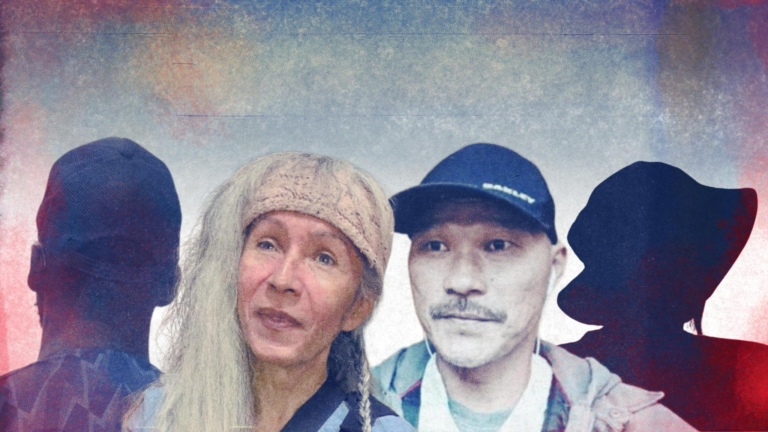
Forbidden Stories and France 24 have gathered other testimonies that paint a similar picture. Barbara*, originally from Tigray, Ethiopia, left for the United States to escape the armed conflict. Soraya*, a bisexual woman from Ghana, also arrived on the first deportation flight, which was predominantly made up of LGBTQIA+ people.
This pattern is by no means a coincidence. David, Fru’s colleague, has been handling dozens of cases from the United States involving people deported to African countries, and said that members of the LGBTQIA+ community “are being sent to countries that criminalize same-sex relationships.” Cameroon, where homosexuality remains a criminal offense, is no exception. “Appearing before a Cameroonian government official to make an (asylum) claim effectively amounts to admitting to criminal behavior,” David explained. “This puts them in an extremely precarious situation.”
Support us so that we can continue investigating
We need your help to expose what the enemies of the press try to keep quiet.
An agreement made in secret
What these women are going through is not an isolated case. Since last January, at least 44 people have been deported to Cameroon. They have two options: first, apply for asylum and stay in the country, with the help of the United Nations High Commissioner for Refugees, the UNHCR. Second, return to their country of origin, assisted by the International Organization for Migration, the IOM.
On paper, these are two clearly defined paths. However, when contacted by Forbidden Stories, the UNHCR sought to distance itself from the issue. “In Cameroon, asylum procedures are managed by national authorities, and the High Commissioner for Refugees supports the government’s initiatives aimed at strengthening the national asylum system,” it stated.
The IOM, which assists people who have decided to go back to their home countries, has drawn heavy criticism. In reality, several of the women Forbidden Stories interviewed felt forced to leave Cameroon. Gisèle, unable to find the medical treatment she needed there, eventually agreed to return to the DRC. “I don’t know how they run their organization, but they deal with people in very vulnerable situations and clearly lack professionalism in the way they treat us,” she said of the IOM. After months in the dilapidated detention center, Gisèle was transferred to the Ngueye Hotel in Yaoundé while waiting for the DRC embassy to issue her travel documents. The IOM then arranged her return to the country.
When contacted by Forbidden Stories, the agency echoed the UNHCR’s position, stating, “Migration policies fall under the jurisdiction of states, not the IOM. When host governments request the IOM’s assistance, its role is limited to addressing the needs of individuals after their arrival, with a focus on their health and well-being.”
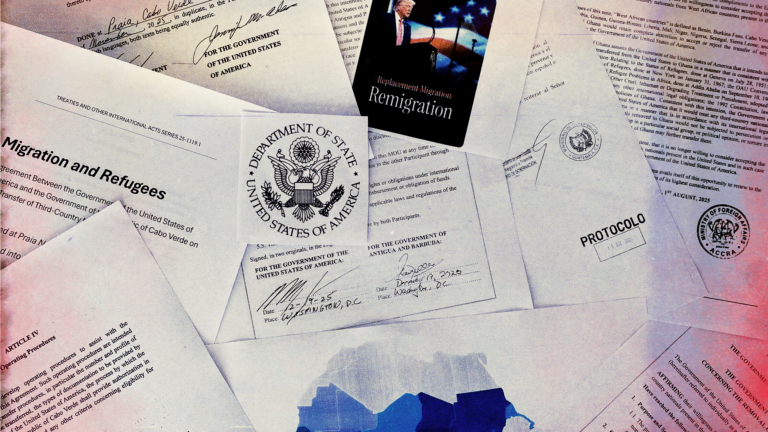
Officially, Cameroonian authorities have never mentioned the arrival of deportees, nor the creation of an agreement with the United States. The first suggestions of the arrangement’s existence came from a diplomatic note dated December 2025, published on the U.S. State Department’s website last June. In it, the Cameroonian government assures that it “would treat any third-country nationals transferred from the United States to Cameroon in a manner that is in accordance with its international legal obligations,” including the principle of non-refoulement. It adds that “the third-country nationals removed to the Republic of Cameroon would not be subjected to persecution … or torture” in Cameroon, nor in any country to which it might subsequently transfer them.

According to information gathered by The Washington Post for this investigation, the exchange of diplomatic notes was finalized on Dec. 16, 2025, and U.S. authorities approved Cameroon’s commitments on Jan. 2, 2026 — two weeks before the first deportation flight. These two successive steps definitively sealed the agreement.
Documents obtained by The Washington Post also outline the deal’s terms: Either party can withdraw, in writing, at any time. A maximum of 1,000 people may be sent to Cameroon. U.S. authorities must prioritize deporting individuals convicted of minor offenses or immigration-related violations. The text does not explicitly rule out transferring individuals convicted of more serious crimes, but suggests that they could be removed from any proposed passenger list.
As detailed as this information may be, it reveals nothing about how the agreement was negotiated. One figure, however, speaks volumes. On Jan. 9 — six days before the first flight carrying deportees — the UNHCR office in Cameroon received a payment of $30 million from the State Department “to facilitate negotiations concerning third-country nationals.”
A post published on X by the U.S. Embassy in Yaoundé, on Jan. 12, 2026.
The UNHCR denied any connection in a response sent to Forbidden Stories. “The U.S. government contributed to UNHCR’s 2026 Global Appeal for operations in the DRC and Cameroon,” it stated. “These contributions were not specifically earmarked for the transfer of third-country nationals. Although donors may allocate their contributions according to their own priorities, UNHCR allocates and uses them in accordance with its mandate and the priorities set out in the Global Appeal.”
For Fru, contacted by Forbidden Stories, this stance can be summed up in one sentence: Since Cameroon agreed to receive these people, it’s up to the government to manage them as refugees. “You don’t treat human beings like that,” he said. “Slavery is over. You can’t trade people for money.” Last July, he filed a complaint with the Yaoundé Administrative Court seeking to suspend the migration agreement and allow the deported individuals to apply for legal protection in Cameroon — a status that would enable them to reside there legally.
You don’t treat human beings like that,” he said. “Slavery is over. You can’t trade people for money.”
It remains to be seen what else this “migration agreement” entails, and what Cameroon received in exchange. According to Michael Bochenek, a legal advisor at Human Rights Watch, there is almost never a single document that proves the quid pro quo. “We’ve been looking at the whole package,” he said. “We’ve been trying to look at all the things that are happening before and immediately after agreements have been signed. We’re looking at the statements of government officials on both sides. … We’re trying to draw this together … but certainly a lot of things happen really quickly in time altogether, and one can reasonably infer that this is all part of the deal.”
On Dec. 16, 2025, just as the exchange of diplomatic notes agreeing to the deportations was coming to a close, Washington and Yaoundé simultaneously signed a five-year memorandum of understanding in an entirely different field: global health security. It contained a joint commitment of $850 million, of which $400 million came from the U.S.
Perhaps the most recent indication of how the deportation agreement benefited Cameroon dates back to Aug. 27, when the two countries held their first economic and trade dialogue in Yaoundé. The U.S. Embassy in Cameroon announced $7 billion in U.S. investment opportunities in the country: rare minerals, energy, digital technology and logistics. None of these announcements mentioned the deportations. But the timing seems anything but coincidental.
Silent until the end
“It’s a hot potato, handled by the presidency. A handful of people manage the money coming in. And they intended to do this in secret,” said a source familiar with the story, who opted for anonymity. Contacted by Forbidden Stories’ partner France 24, a person close to the Cameroonian government denied any cover-up. “The arrest of the journalists was the result of the clumsy behavior of a few overzealous police officers,” they said. “There is no code of silence. Cameroon is a free country; there are no taboo subjects.”
It took six months of investigation for the voices of Gisèle, Selma, Barbara and Soraya to break through the silence — the very same voices the Cameroonian police sought to quiet by detaining the journalists who had come to amplify them. “We want to get out. We want our freedom,” Gisèle said last June. She has since left Cameroon to return to the DRC, and Forbidden Stories has lost track of her. Meanwhile, although Akua and his colleague were released on the day of their arrest, safety concerns have prevented either of them from working on this story since.
*First names have been changed at the request of the individuals concerned.
Read also